When a part’s shape is too complex, too large, or too cost-sensitive to machine from plate, casting is usually the answer. But ‘aluminum casting’ is not one process — it is four very different routes: sand, die, investment, and permanent mold. Pick the wrong one and you either blow the tooling budget on a low-volume job or wreck your margins with a process that cannot hold the tolerance you need. This guide gives procurement and design engineers a clear comparison so you can specify the right process on the first try.
Throughout, we focus on what buyers actually feel: tolerances, surface finish, minimum wall thickness, production volume, tooling cost, and the mechanical properties you can expect in the finished part. For the alloy side of the decision, see our mechanical properties chart and the China sourcing guide.
⚠️ Buyer Pain: We tooled a die-cast die for 20,000 parts a year but only ever ordered 3,000 — the amortized tooling killed the program.
✅ HXM Solution: Classic process mismatch. Die casting only pays back its tooling above roughly 10,000-50,000 parts/year. Below that, permanent mold or even sand casting is the cheaper total-cost route. We map the crossover points below.
Why Cast Aluminum at All?
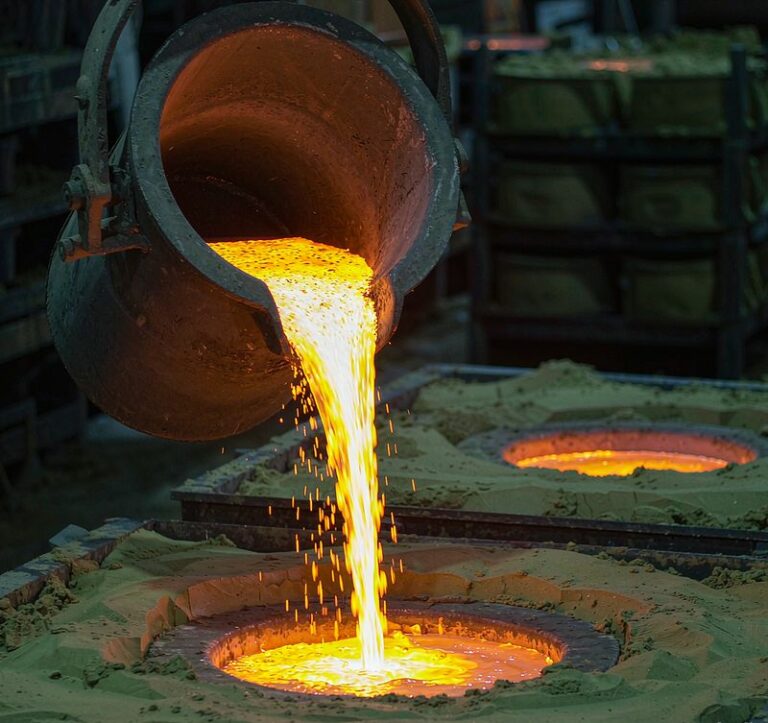
Aluminum’s low melting point (~660 deg C), good fluidity, and light weight make it the most cast non-ferrous metal. Casting lets you create near-net shapes with internal cavities, thin features, and complex geometry that would be impossible or uneconomic to machine. The trade-off is that cast properties are generally lower than wrought (you trade some strength and ductility for shape freedom), and process choice sets both your cost curve and your quality ceiling.
The four processes sit on a spectrum from cheap-and-flexible (sand) to fast-and-precise-but-expensive-to-tool (die casting), with investment and permanent mold in between for complexity and repeatability respectively.
1. Sand Casting — The Flexible Baseline
Sand casting packs prepared sand around a pattern to form a mold, pours molten aluminum, then breaks the sand away. It handles the largest parts and lowest volumes, needs almost no tooling (wood or 3D-printed patterns suffice), and accepts any alloy. Dimensional tolerance is the loosest of the four (~CT8-CT10, +/- 1-3 mm on big parts) and surface finish is rough, but for prototypes, spares, and low-run industrial components it is unbeatable on cost and lead time.
- Best for: prototypes, one-offs, large housings, low annual volume.
- Tooling cost: very low (patterns, not dies).
- Volume: 1 to a few thousand per year.
- Watch out: porosity, lower repeatability, finishing required.
2. Die Casting — High Volume, Thin Walls, Tight Repeatability
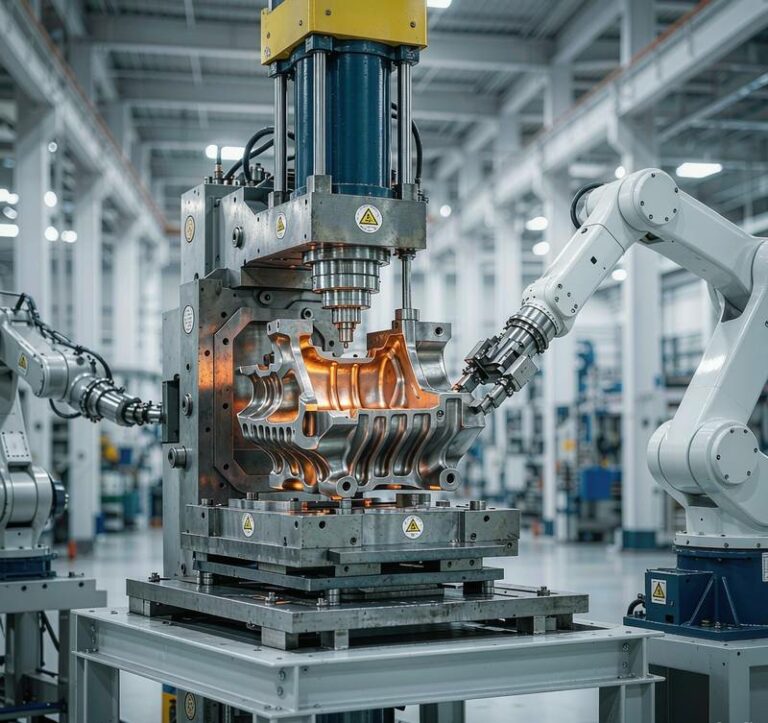
Die casting injects molten aluminum into a hardened steel die at high pressure. It delivers excellent dimensional repeatability, thin walls (down to ~1 mm), and smooth surfaces at very high cycle rates — but the steel die is expensive (tens to hundreds of thousands of dollars) and only amortizes over large volumes. It is the default for automotive and consumer hardware (engine brackets, housings, heatsinks).
- Best for: high-volume production (50k+/year), thin-wall, complex repeatable parts.
- Tooling cost: high (steel dies).
- Volume: tens of thousands to millions per year.
- Watch out: die cost, and hot-chamber limits on some alloys; entrapped gas can limit heat treatment.
3. Investment Casting — Complexity Without Draft
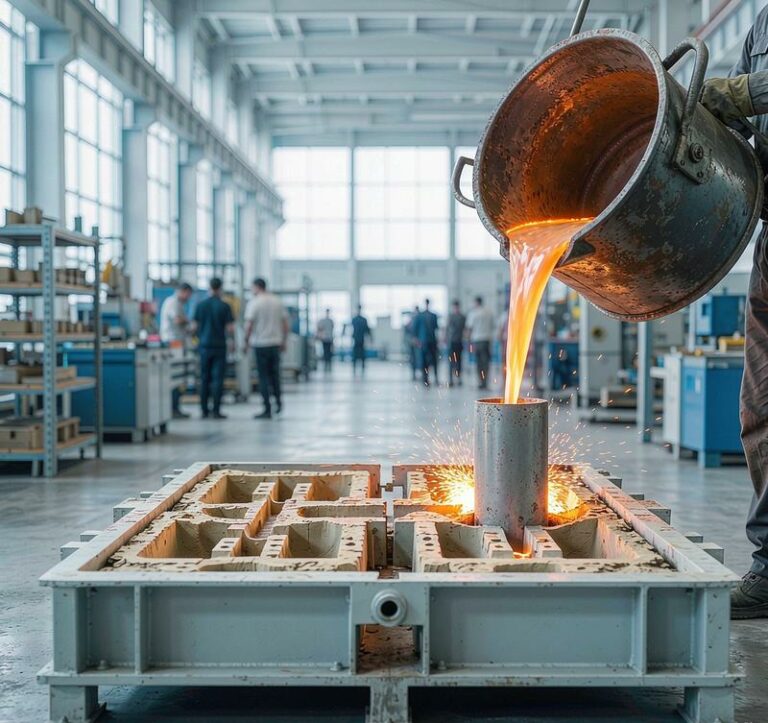
Investment casting (lost-wax) builds a ceramic shell around a wax pattern, melts the wax out, and pours metal into the void. With no parting line or draft requirement, it reproduces the most intricate geometry and finest detail of any aluminum process, with good surface finish and tolerances tighter than sand. The shell is single-use, so per-part cost is higher and lead time longer — but for turbine hardware, medical instruments, and complex aerospace brackets it is often the only route.
- Best for: complex, low-to-medium volume parts where machining would be impossible.
- Tooling cost: moderate (wax tooling, not steel dies).
- Volume: tens to tens of thousands per year.
- Watch out: longer lead time, higher unit cost, shell-based porosity control.
4. Permanent Mold — Better Properties Than Sand, Reusable Tooling
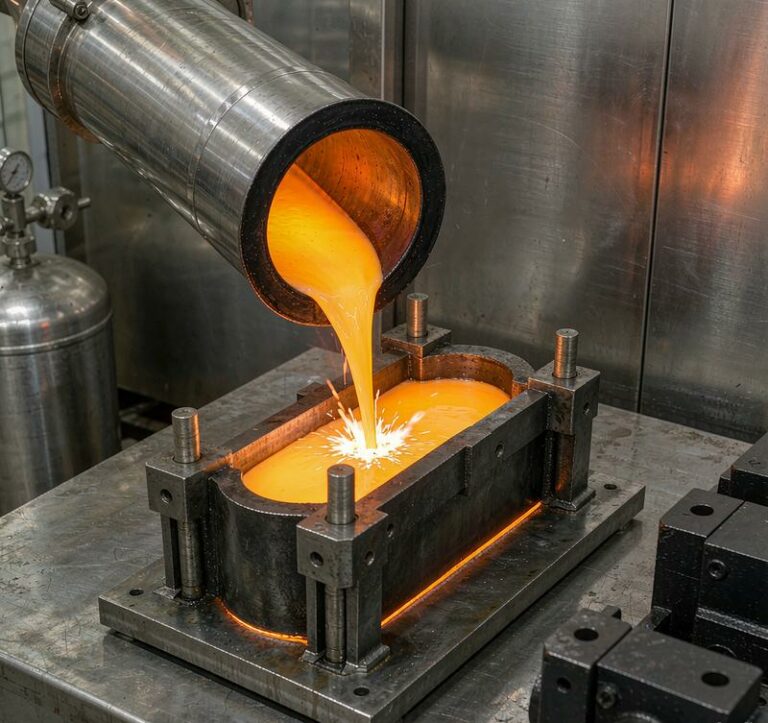
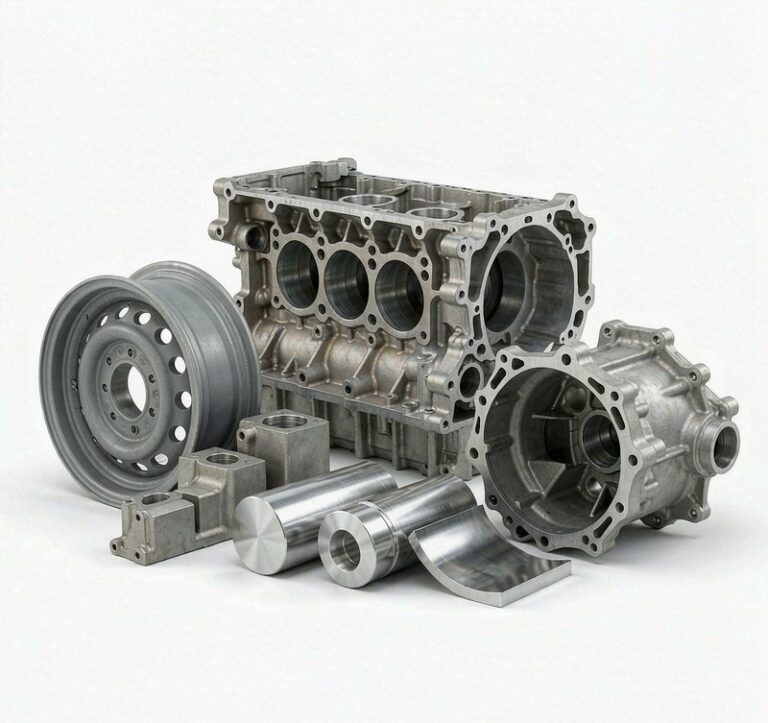
Permanent mold casting uses a reusable metal (usually cast iron or steel) mold, filled by gravity or low pressure. Because the chills of the metal mold solidify the part faster, you get denser, stronger, more repeatable parts than sand casting, with better surface finish, at a fraction of die-cast tooling cost. Volumes sit between sand and die. It is widely used for wheels, cylinder heads, and structural brackets.
- Best for: medium volumes (thousands to ~100k/year) needing better properties than sand.
- Tooling cost: moderate (metal molds).
- Volume: thousands to ~100,000 per year.
- Watch out: geometry must allow mold withdrawal; not for very complex internal cores.
Side-by-Side Comparison
| Attribute | Sand | Permanent Mold | Investment | Die (HPDC) |
|---|---|---|---|---|
| Typical tolerance | CT8-CT10 (loose) | CT7-CT9 | CT5-CT7 | CT4-CT6 (tight) |
| Surface finish (Ra µm) | 12-25 | 6-12 | 3-6 | 1.6-6 |
| Min wall (mm) | 3-5 | 3-4 | 1.5-3 | 1-2 |
| Tooling cost | Very low | Moderate | Moderate | High |
| Unit cost @ volume | Low (low vol) | Mid | Higher | Low (high vol) |
| Annual volume fit | 1 – few k | k – ~100k | tens – tens k | 50k – millions |
| Mechanical density | Lower | Higher | Mid-High | High |
| Best geometry | Large/simple | Withdrawable | Most complex | Thin/complex repeatable |
⚠️ Buyer Pain: the quote came back with CT9 tolerances but our drawing needs CT6
CT9 points to sand casting; CT6 needs permanent mold or die casting. Tell suppliers your tolerance band up front — it changes both the process and the price, not just the inspection plan.
Which Aluminum Alloy Do You Cast?
Cast aluminum uses the 3xx.x series (aluminum-silicon-copper/magnesium) rather than the wrought series. Common choices:
- A356 / 356.0 — heat-treatable, excellent castability and corrosion resistance; the aerospace and wheel workhorse (T6 heat treated).
- A380 / 380.0 — the die-casting default; good fluidity, strength, and cost.
- A319 / 319.0 — higher copper for elevated-temperature strength (engine parts).
- A413 / 413.0 — superb fluidity for thin, intricate die-cast sections.
Alloy choice interacts with process: die casting favors high-silicon, free-flowing grades; sand and permanent mold more often use heat-treatable A356 for properties. Note that casting alloys are different from the wrought grades in our properties chart — do not spec a 6061 casting.
Quality, Defects, and Certification
Every casting process fights the same enemies: porosity, shrinkage, inclusions, and hot cracking. Mitigation differs by process — vacuum assist in die casting, riser design in sand, shell control in investment — but the buyer’s job is to set the acceptance bar.
- X-ray / radiographic inspection for aerospace and pressure-bearing parts.
- Pressure test for hydraulic and manifold castings.
- EN 10204 3.1 mill certificate documenting alloy, heat, and mechanical results.
- Heat treatment (T5/T6) where properties must be certified.
Plan finishing too: most cast parts need shot blasting, machining, and often surface finishing or anodizing for corrosion service — see our guides.
Five-Question Checklist to Pick the Process
- What annual volume? <1k → sand; 1k-100k → permanent mold or investment; >50k → die cast.
- How tight is the tolerance? Loose → sand; tight repeatable → die; fine detail → investment.
- How complex is the geometry? Intricate/internal → investment; withdrawable → permanent mold; thin repeatable → die.
- What properties are required? Need density/strength → permanent mold or die; certifiable T6 → A356 routes.
- What is the tooling budget? Minimal → sand; moderate → permanent mold/investment; high OK → die cast.
Map your answers and the process usually falls out. If you straddle two, run a total-cost model over your real volume — tooling amortization is where programs win or die.
Sourcing Cast Aluminum: What to Specify on the RFQ
When you request quotes, give suppliers enough to quote the right process:
- Part drawing with tolerance band and critical dimensions.
- Annual volume and lot size.
- Alloy and required temper (e.g. A356-T6).
- Surface finish, porosity class, and inspection (X-ray / pressure test).
- Finishing (blasting, machining, anodizing) and certification (EN 10204 3.1).
Our sourcing guide walks through Incoterms and landed-cost modeling so the quoted number reflects reality, and the price-trends guide helps time the buy.
Not sure which casting process fits your part?
Send us the drawing, annual volume, and tolerance band. Our engineering team recommends the right process and alloy, and connects you with qualified foundries — with EN 10204 3.1 certification and full inspection.
Frequently Asked Questions
What are the four main aluminum casting processes?
Sand, permanent mold, investment (lost-wax), and die casting (high-pressure). They trade off tooling cost, volume, tolerance, surface finish, and mechanical properties.
Which casting process is cheapest?
Sand casting has the lowest tooling and is cheapest at low volume and for large parts. Die casting has high tooling but the lowest unit cost at very high volume.
Which process gives the best surface finish?
Die casting and investment casting give the finest finishes (low Ra). Sand casting is roughest and usually needs finishing.
Which process has the tightest tolerances?
High-pressure die casting holds the tightest repeatable tolerances (roughly CT4-CT6). Investment casting is next for complex shapes; sand is loosest.
When should I choose permanent mold over sand?
When you need better density, strength, surface finish, and repeatability than sand can give, at medium volume (thousands to ~100k/year), without die-cast tooling cost.
When is investment casting worth the cost?
When the geometry is too complex for draft or parting lines (intricate internal features, fine detail) and volumes do not justify die tooling. Common in aerospace and medical parts.
What alloy should I cast?
Use casting alloys, not wrought grades. A356/T6 is common for properties and corrosion; A380 is the die-casting default; A319 for heat resistance; A413 for thin intricate sections.
Can cast aluminum be heat treated?
Yes. Heat-treatable casting alloys like A356 are commonly supplied T5 or T6 to certify mechanical properties. Confirm the temper on the PO.
How do I control porosity in castings?
Process-dependent: vacuum-assist die casting, good riser/gating design in sand, shell control in investment. Specify X-ray or pressure-test acceptance criteria on the RFQ.
What certification should I require?
EN 10204 3.1 mill certificate documenting alloy, heat, and mechanical results; add X-ray/pressure-test reports for critical parts. State inspection class up front.
What minimum wall thickness can each process cast?
Roughly: sand 3-5 mm, permanent mold 3-4 mm, investment 1.5-3 mm, die casting 1-2 mm. Die casting wins for thin-wall high-volume parts.
Which process is best for automotive volume production?
High-pressure die casting, for its speed, repeatability, and thin-wall capability at hundreds of thousands of units per year.
How do I decide between die casting and permanent mold?
Compare annual volume against tooling amortization. Die casting pays back only above roughly 10,000-50,000 parts/year; below that, permanent mold is usually cheaper total cost.
Where can I learn more about sourcing and costing cast aluminum?
Our China sourcing guide covers RFQs, Incoterms, and landed cost; the 2026 price-trends guide helps time purchases. Send us the drawing for a process and alloy recommendation.
Ready to choose the right aluminum casting process?
Share your drawing, volume, and tolerance band. We recommend the optimal process and alloy and line up qualified supply with full certification and inspection.