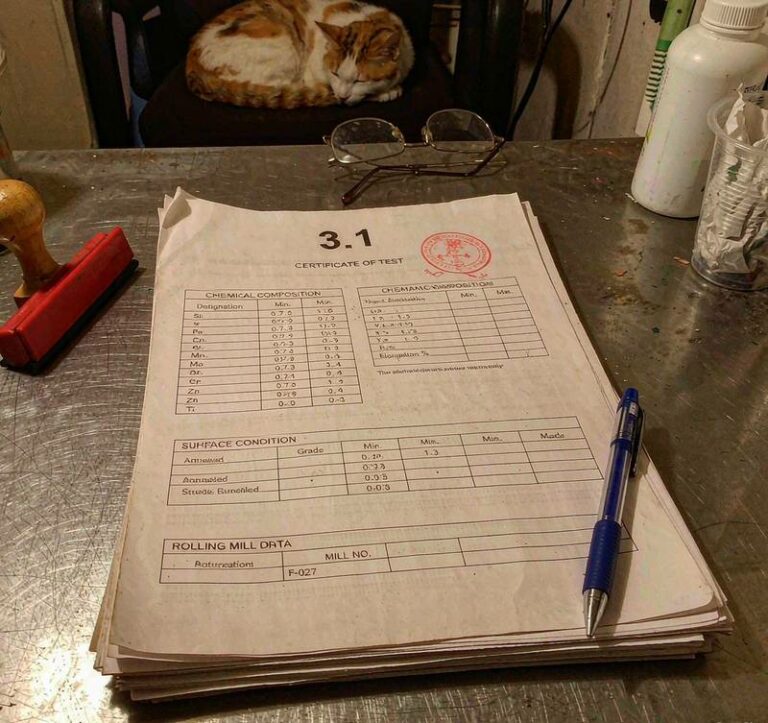
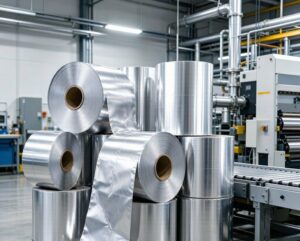
You’ve ordered “6061-T6 sheet” and received three different certificates: ASTM B209 from the US mill, ” “EN 485-2 from Germany, JIS H4040 from Japan, and GB/T 3880 from China. Are they the same alloy? Sometimes yes — but the composition ” “limits diverge by 0.05% on Magnesium or 0.10% on Iron, and that small delta is enough to fail a strict aerospace or rail inspection. ” “This guide gives you the cross-reference tables and the testing-orientation differences every international buyer needs ” “to source aluminum without surprises.
Aluminum is one of the most globally traded non-ferrous metals, and the same alloy family exists under at least four major designation ” “systems: AA (USA), EN (Europe), JIS (Japan), and GB (China). Each system has its own product standards for sheet, plate, ” “extrusion, bar, tube, and casting. A 6061-T6 sheet from a US mill to ASTM B209 is nominally the same material as a ” “EN AW-6061 T6 sheet to EN 485-2 from a German supplier — but the actual iron limit can differ, ” “the test orientation conventions differ, and the mill certificate language differs.
If you buy aluminum across borders — and almost every B2B buyer does — you need a single map for these four systems. The chapters that ” “follow give you that map: cross-reference tables for the 14 most common alloys, side-by-side composition limits for 6061, mechanical ” “property test orientation conventions, dimensional tolerances, surface-finish codes, temper alignment, and the certification hierarchy ” “(EN 10204 3.1 vs ASTM A1057 vs JIS G0415 vs GB/T 3275). The article ends with the five most expensive mistakes buyers make when ” “mixing standards — and a practical reference card you can print and pin to your desk.

Why This Comparison Matters for International Buyers
Three forces drive the need for cross-standard fluency. (1) Supply-chain globalization: aluminum mills in China, ” “India, the UAE, Turkey, and Vietnam now supply 60%+ of semi-finished aluminum products globally. A German buyer can receive a coil ” “with a GB/T 3880 cert; a US buyer can receive a JIS H4000 plate. Without a cross-reference map, the buyer’s QC team rejects valid material.
(2) Traceability: regulated industries (aerospace, rail, automotive, pressure equipment, defense) demand end-to-end ” “traceability from melt to finished part. The traceability rules differ by standard: EN 10204 3.1 / 3.2 in EU, ASTM A1057 in USA, ” “GB/T 3275 in China, JIS G0415 / G0416 in Japan. A buyer who specifies ASTM but receives a GB/T cert has a traceability gap that auditors ” “will flag.
(3) Regulatory compliance: REACH (EU chemicals), RoHS 3 (EU electronics), DFARS (US defense), CE marking (EU pressure ” “equipment), and Buy American Act each have rules about country-of-origin, substance declaration, and inspection level. The cert ” “standard is the proof of compliance. If your material arrives with a cert standard your regulator doesn’t recognize, you cannot ” “ship the finished product.
This is why the four systems matter — not as abstract trivia, but as a real cost of doing international aluminum business. ” “Our guide to sourcing aluminum from China ” “and 2026 aluminum market price guide provide broader ” “context, while this article focuses on the standards specifically.
Major Standards Bodies & Designations
The table below lists the principal standards bodies that govern aluminum composition, product form, and certification. ” “Most countries maintain their own national body, but the four that matter for global commerce are the Aluminum Association ” “(AA) in the USA, CEN / EN in Europe, JIS in Japan, and GB / SAC in China. ” “ISO provides a non-binding international mirror, while DIN (Germany) and BS (UK) are historical and now superseded by EN.
| Body / Designation | Region / Scope | Alloy Designation Format | Key Product / Material Standards |
|---|---|---|---|
| AA (Aluminum Association) | USA / International | 4-digit (1xxx-8xxx) | ASTM B209 sheet, B221 extrusions, B211 bar |
| EN (CEN, European Norm) | European Union / EEA | EN AW-XXXX (wrought) / EN AC-XXXXX (cast) | EN 485 sheet/plate, EN 586 extrusions, EN 573 composition |
| JIS (Japanese Industrial Standards) | Japan / Asia-Pacific | A + 4-digit (wrought) / AC + 4-digit (cast) | JIS H4000 sheet/plate, JIS H4040 rod/bar, JIS H4100 extrusions |
| GB (Guobiao, China) | China (mandatory) | Same digits as AA, prefixed by 1-7 | GB/T 3190 composition, GB/T 3880 sheet/plate, GB/T 6892 extrusions |
| ISO (International Org. for Standardization) | Global (non-binding) | Mirror AA (ISO 6361) | ISO 6361 sheet/strip, ISO 209 wrought, ISO 3522 cast |
| DIN (legacy, now superseded) | Germany (legacy) | Werkstoff-Nr. (e.g., 3.3211) | DIN 1725 (historical, replaced by EN) |
| BS (legacy, now superseded) | United Kingdom (legacy) | BS 1470/1471 series (historical) | BS EN 485, BS EN 573 (current) |
| UNS (Unified Numbering System) | USA cross-reference | A9XXXX (e.g., A96061) | Cross-references AA, used in ASTM |
| AMS (Aerospace Material Spec) | USA aerospace | AMS-QQ-A-250/xx (sheet) | AMS 4027, AMS 4045, AMS-QQ-A-250/11 |
ℹ️ Reader tip
If you only memorize one designation system, memorize the AA four-digit number (1xxx through 8xxx). Every other system in the world recognizes it and uses it as a cross-reference anchor.
Wrought Alloy Designation Systems (AA 4-digit vs EN Chemical vs JIS A-NNNN vs GB)
For wrought products (sheet, plate, extrusion, bar, tube, wire), each standards body uses its own format. The AA four-digit ”
“system is the global reference: the first digit indicates the alloy family (1xxx = pure, 2xxx = Al-Cu, 3xxx = Al-Mn, 4xxx = Al-Si, ”
“5xxx = Al-Mg, 6xxx = Al-Mg-Si, 7xxx = Al-Zn, 8xxx = other). EN uses both a numeric form (EN AW-6061) and a chemical name ”
“form (EN AW-AlMg1SiCu); JIS prefixes ‘A’ before the 4 digits; GB mirrors the AA digits. UNS provides a US cross-reference ”
“(A9xxxx) used in ASTM standards.
| Designation System | Format Pattern | Example (6061) | Where It Is Used |
|---|---|---|---|
| AA / Aluminum Association | Single 4-digit number | 6061 | USA, global commerce |
| EN Chemical (wrought) | EN AW-XXXX or EN AW-XXXX(X) | EN AW-6061 [Al Mg1SiCu] | EU / EEA, CE-marked products |
| EN Numeric (legacy) | EN AW-AlMg1SiCu (chemical name) | EN AW-AlMg1SiCu | EU, technical drawings |
| JIS (wrought) | A + 4 digits | A6061 | Japan, Japanese OEM specs |
| GB (China wrought) | Same 4 digits, sometimes prefixed | 6061 / 6061A | China, domestic supply |
| UNS Cross-reference | A9XXXX | A96061 | Global databases, ASTM |
| AMS Aerospace | AMS-QQ-A-250/XX | AMS-QQ-A-250/11 (6061-T6 sheet) | Aerospace OEM |
| ISO 6361 | Same 4 digits | Al Mg1SiCu (chemical) | International |
The relationship between AA, EN, JIS, GB, and UNS for any alloy is a direct one-to-one mapping — there are no ‘AA-only’ ” “alloys. If you cannot find a JIS designation for an alloy, it is not because the alloy doesn’t exist in Japan; it is because no ” “Japanese mill currently produces it under that designation. Always cross-check using the AA family digit.
Cast Alloy Designation Systems
Cast aluminum alloys use a completely different designation family from wrought. The most common casting alloys are ” “Al-Si (3xx.x), Al-Cu (2xx.x), Al-Mg (5xx.x), and Al-Zn (7xx.x) in AA notation; EN AC-XXXXX (5-digit numeric) or ” “EN AC-AlSi7Mg (chemical name); JIS AC + digits (e.g., AC4C); and GB ZL + 3 digits (e.g., ZL101). Cast alloys are poured from melt ” “into molds — they cannot be extruded or rolled into sheet.
| Designation System | Format Pattern | Example | Typical Use |
|---|---|---|---|
| AA / Aluminum Association | 3 digits + .X (e.g., 356.0) | A356.0 | USA, sand/permanent mold casting |
| EN Cast | EN AC-XXXXX (5-digit numeric) | EN AC-42100 (≈ A356) | EU automotive, machinery |
| EN Cast (chemical) | EN AC-AlSi7Mg0.3 | EN AC-AlSi7Mg0.3 | EU technical drawings |
| JIS Cast | AC + digits + optional letter | AC4C (≈ A356) | Japan automotive |
| GB Cast | ZL + 3 digits (e.g., ZL101) | ZL101 (≈ A356) | China foundries |
| ISO Cast | Mirror AA 3-digit | Al Si7Mg | Global reference |
A356.0-T6 (USA), EN AC-42100 T6 (EU), AC4C-T6 (Japan), and ZL101A-T6 (China) are the same cast alloy family — AlSi7Mg0.3 — ” “and are widely used for automotive wheels, pump housings, valve bodies, and aerospace castings. The four standards agree on the ” “principal chemistry; minor differences appear in impurity limits and heat-treatment soak times.
Common Alloys Cross-Reference (AA / EN / JIS / GB / UNS)
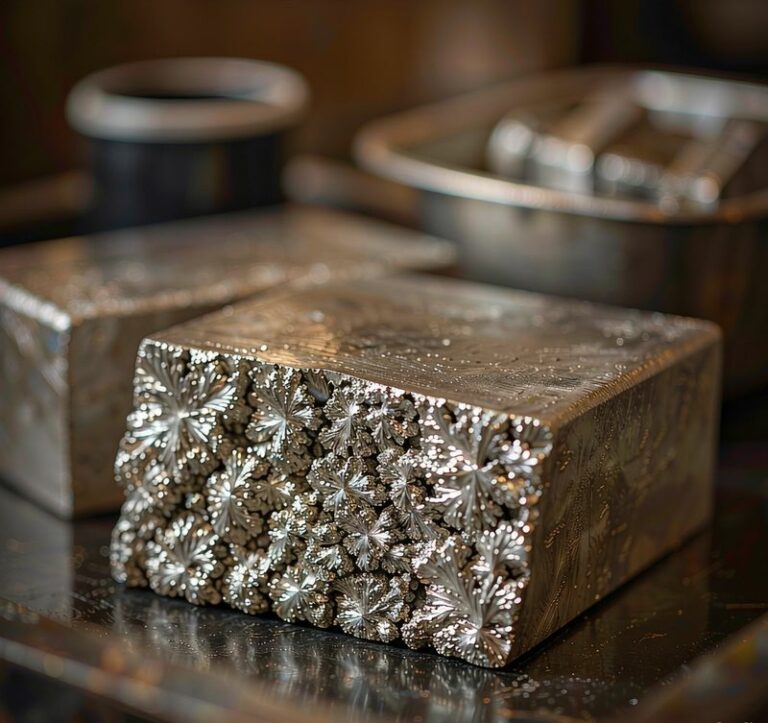
The 14 alloys below cover ~95% of all aluminum mill products used in B2B applications — from chemical tanks (1050) to ” “aerospace structures (7075). For each, the AA designation is the anchor; EN, JIS, GB, and UNS are direct cross-references. ” “Where you see (chemical name) in EN, that is the alternative form used in technical drawings and CE documentation.
| Alloy Family | AA / UNS | EN Wrought (AW) | JIS (A-prefix) | GB (China) | Typical Use |
|---|---|---|---|---|---|
| Pure 99.5% | 1050 / A91050 | EN AW-1050A | A1050 | 1050 | Chemical tanks, foil, electrical bus |
| Pure 99.0% | 1100 / A91100 | EN AW-1100 | A1100 | 1100 | Cookware, fin stock, sheet metal |
| Pure 99.0% alt | 1060 / A91060 | EN AW-1060 | A1060 | 1060 | Electrical conductors, busbars |
| Al-Cu (2xxx) | 2024 / A92024 | EN AW-2024 | A2024 | 2024 | Aircraft skin, structures |
| Al-Mn (3xxx) | 3003 / A93003 | EN AW-3003 | A3003 | 3003 | Cookware, roofing, signage |
| Al-Mn (3xxx) | 3004 / A93004 | EN AW-3004 | A3004 | 3004 | Beverage can body, roofing |
| Al-Mg (5xxx) | 5052 / A95052 | EN AW-5052 | A5052 | 5052 | Marine, fuel tanks, pressure vessels |
| Al-Mg (5xxx) | 5083 / A95083 | EN AW-5083 | A5083 | 5083 | Marine hulls, cryogenic, shipbuilding |
| Al-Mg (5xxx) | 5086 / A95086 | EN AW-5086 | A5086 | 5086 | Marine structures, rail cars |
| Al-Mg-Si (6xxx) | 6061 / A96061 | EN AW-6061 | A6061 | 6061 | Structural, frames, machinery |
| Al-Mg-Si (6xxx) | 6063 / A96063 | EN AW-6063 | A6063 | 6063 | Architectural extrusions, tubes |
| Al-Mg-Si (6xxx) | 6082 / A96082 | EN AW-6082 | A6082 | 6082 | Structural Europe, bridges, cranes |
| Al-Zn (7xxx) | 7075 / A97075 | EN AW-7075 | A7075 | 7075 | Aerospace, high-stress structures |
| Al-Zn-Mg (7xxx) | 7005 / A97005 | EN AW-7005 | A7005 | 7005 | Weldable aerospace, bicycle frames |
If your alloy is not in this table, look up the AA four-digit family digit. 1xxx = pure, 3xxx = Al-Mn, 5xxx = Al-Mg, ” “6xxx = Al-Mg-Si, 7xxx = Al-Zn. Each family has well-defined property profiles and you can narrow the search quickly. ” “For deeper alloy-specific details, see our 6061 alloy guide, ” “6063 alloy guide, and ” “7075 aerospace guide.
Composition Limits — Side-by-Side Example: 6061
6061 is the world’s most-traded heat-treatable aluminum alloy, so its composition limits are the most carefully ” “harmonized across standards. The table below compares the limits per ASTM B209 (USA), EN 573-3 (EU), JIS H4040 (Japan), and ” “GB/T 3190 (China). All values are weight-percent, balance aluminum.
| Element | ASTM B209 (USA) | EN 573-3 (EU) | JIS H4040 (Japan) | GB/T 3190 (China) |
|---|---|---|---|---|
| Silicon (Si) | 0.40 — 0.80 | 0.30 — 0.70 | 0.40 — 0.80 | 0.40 — 0.80 |
| Iron (Fe) | ≤ 0.70 | ≤ 0.50 | ≤ 0.70 | ≤ 0.70 |
| Copper (Cu) | 0.15 — 0.40 | 0.10 — 0.40 | 0.15 — 0.40 | 0.15 — 0.40 |
| Manganese (Mn) | ≤ 0.15 | ≤ 0.15 | ≤ 0.15 | ≤ 0.15 |
| Magnesium (Mg) | 0.80 — 1.20 | 0.80 — 1.20 | 0.80 — 1.20 | 0.80 — 1.20 |
| Chromium (Cr) | 0.04 — 0.35 | 0.04 — 0.35 | 0.04 — 0.35 | 0.04 — 0.35 |
| Zinc (Zn) | ≤ 0.25 | ≤ 0.20 | ≤ 0.25 | ≤ 0.25 |
| Titanium (Ti) | ≤ 0.15 | ≤ 0.15 | ≤ 0.15 | ≤ 0.15 |
| Other each | ≤ 0.05 | ≤ 0.05 | ≤ 0.05 | ≤ 0.05 |
| Other total | ≤ 0.15 | ≤ 0.15 | ≤ 0.15 | ≤ 0.15 |
| Aluminum (Al) | Balance | Balance | Balance | Balance |
The two notable divergences: Iron (≤ 0.70% in ASTM / JIS / GB, ≤ 0.50% in EN) and Zinc ” “(≤ 0.25% in ASTM / JIS / GB, ≤ 0.20% in EN). For most structural applications the difference is irrelevant; ” “for aerospace (AMS-QQ-A-250/11) the buyer usually requires Fe ≤ 0.50% regardless of the issuing standard.
⚠️ Buyer Pain: ASTM 6061 max Fe 0.70% vs EN 6061 max Fe 0.50% — buyer didn’t notice the divergence
✅ HXM Solution: HXM issues EN 10204 3.1 certs with full traceability and lets buyers specify the tighter limits per ASTM, EN, JIS, or GB. Send us your spec, we will confirm chemistry, mechanical properties, and dimensional tolerance against the exact standard you require — no substitutions, no surprises.
Mechanical Property Testing Orientations — The Critical Difference
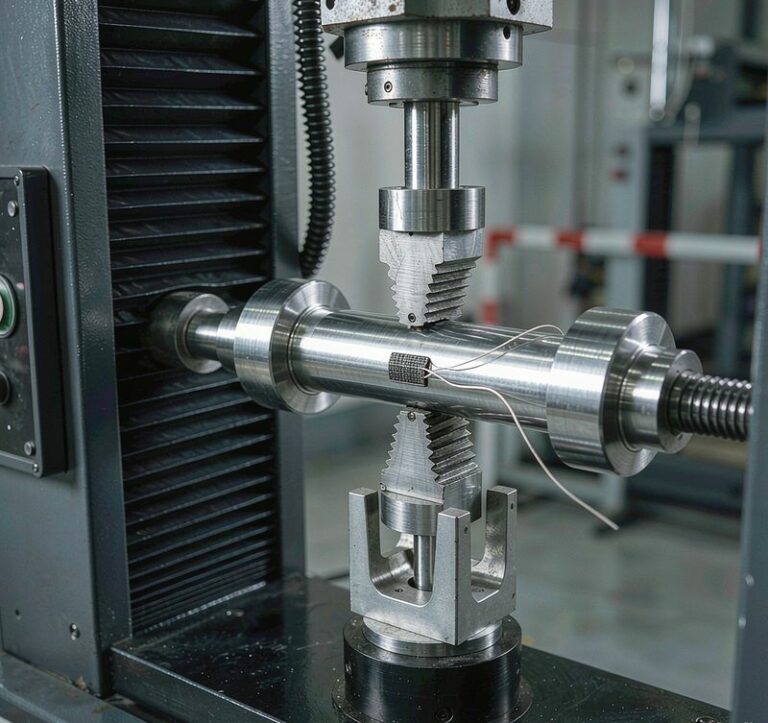
For plate and thick extrusions, the orientation of the tensile test specimen relative to the rolling direction determines ” “the reported values. The three directions are Longitudinal (L), Long-Transverse (LT), and ” “Short-Transverse (ST). All standards require at least the L direction; thicker sections increasingly require LT ” “and ST data. For thick plate ≥ 75 mm used in through-thickness load (e.g., pressure vessels, rail bogies), the ST values are ” “the binding constraint and can be 5–15% lower than L values.
| Direction | ASTM B557 (USA) | EN 10002-1 (EU) | JIS Z2241 (Japan) | GB/T 228 (China) |
|---|---|---|---|---|
| Longitudinal (L) | Rm 290 MPa / Rp0.2 240 MPa | Rm 290 MPa / Rp0.2 240 MPa | Rm 290 MPa / Rp0.2 240 MPa | Rm 290 MPa / Rp0.2 240 MPa |
| Long-Transverse (LT) | Rm 290 MPa / Rp0.2 240 MPa | Rm 290 MPa / Rp0.2 240 MPa | Rm 285 MPa / Rp0.2 235 MPa | Rm 290 MPa / Rp0.2 240 MPa |
| Short-Transverse (ST) | Rm 270 MPa / Rp0.2 220 MPa | Rm 270 MPa / Rp0.2 220 MPa | Rm 265 MPa / Rp0.2 215 MPa | Rm 270 MPa / Rp0.2 220 MPa |
| Sample Geometry | Rectangular sheet/flat | Round or flat proportional | Round or flat proportional | Round or flat proportional |
| Strain Rate | 0.5–5 mm/min | 0.00025–0.0025 /s | 0.5–10 mm/min | 0.00025–0.0025 /s |
| Offset Method | 0.2% offset | Rp0.2 (0.2% offset) | 0.2% offset | 0.2% offset |
When you order 12 mm to 75 mm thick plate, always specify the test direction you need on the MTC. ” “A generic ‘6061-T651’ label may mean the mill tested only the L direction, which is fine for sheet but not for plate in through-thickness ” “load. If your design uses ST data, request ST values explicitly. The orientation gap is one of the most common causes of ” “field failure in thick-plate applications — and one of the easiest to fix at the order stage.
Thickness & Width Tolerances Across Standards
Dimensional tolerances are where standards differ most. EN 485-3 is generally the tightest (smallest ± values), ” “GB/T 3880 is the loosest, and ASTM B209 and JIS H4000 sit in between. For sheet under 3 mm the difference is small ” “(0.01–0.03 mm); for plate over 12 mm the difference widens to 0.10–0.20 mm. Width and length tolerances are more ” “asymmetric — most standards use ‘+X / −0 mm’ to allow extra material for trimming.
| Parameter | EN 485-3 (EU) | ASTM B209 (USA) | JIS H4000 (Japan) | GB/T 3880 (China) |
|---|---|---|---|---|
| Sheet 0.5–1.0 mm thickness | ± 0.04 mm | ± 0.04 mm (±4%) | ± 0.06 mm | ± 0.05 mm |
| Sheet 1.0–3.0 mm thickness | ± 0.06 mm | ± 0.06 mm (±3%) | ± 0.08 mm | ± 0.07 mm |
| Sheet 3.0–6.0 mm thickness | ± 0.10 mm | ± 0.10 mm (±3%) | ± 0.12 mm | ± 0.12 mm |
| Plate 6–12 mm thickness | ± 0.20 mm | ± 0.20 mm | ± 0.25 mm | ± 0.25 mm |
| Plate 12–50 mm thickness | ± 0.30 mm | ± 0.30 mm | ± 0.40 mm | ± 0.40 mm |
| Width ≤ 1000 mm | + 2 / −0 mm | + 3.0 / −0 mm | + 5 / −0 mm | + 3 / −0 mm |
| Width 1000–2000 mm | + 3 / −0 mm | + 4.0 / −0 mm | + 8 / −0 mm | + 4 / −0 mm |
| Length ≤ 2000 mm | + 5 / −0 mm | + 6 / −0 mm | + 10 / −0 mm | + 6 / −0 mm |
| Length 2000–5000 mm | + 8 / −0 mm | + 10 / −0 mm | + 15 / −0 mm | + 10 / −0 mm |
| Flatness (sheet, longitudinal) | ≤ 0.4% of length | ≤ 0.5% of length | ≤ 0.5% of length | ≤ 0.5% of length |
For high-precision applications (e.g., aerospace panels, semiconductor equipment), the buyer should explicitly specify ” “EN 485-3 tolerances or even tighter than-standard limits. For commodity applications (general fabrication, structural frames), ” “ASTM B209 tolerances are typically sufficient.
Flatness & Squareness Tolerances
Beyond thickness and width, flatness and squareness determine whether a sheet can be ” “fed automatically into a laser cutter, press brake, or roll-former without manual adjustment. The four standards express ” “flatness differently:
- EN 485-3: flatness ≤ 0.4% of length (sheet ≤ 6 mm); for plate uses a wave-height limit in mm
- ASTM B209: flatness ≤ 0.5% of length for sheet; for plate a separate ‘wave-height’ table
- JIS H4000: flatness ≤ 0.5% of length; specific classes (Class A tighter, Class B standard)
- GB/T 3880: flatness ≤ 0.5% of length; tightest grade (high-precision) requires negotiation
Squareness (the perpendicularity of edges) is typically expressed as the deviation from 90° on a reference length: ” “EN 485-3 ≤ 1.0 mm / 100 mm, ASTM B209 ≤ 1.5 mm / 100 mm, JIS H4000 ≤ 2.0 mm / 100 mm, GB/T 3880 ≤ 2.0 mm / 100 mm. ” “If your downstream process requires tight squareness (e.g., welded assemblies), specify EN 485-3 or order ‘precision cut’ ” “edges from your supplier.
Sourcing Aluminum Under Multiple Standards?
HXM Aluminum issues EN 10204 3.1 certs with composition traceability to ASTM, EN, JIS, or GB. Tell us your spec and we will confirm chemistry, properties, and tolerances against the exact standard you require.
Surface Finish Designations Across Standards
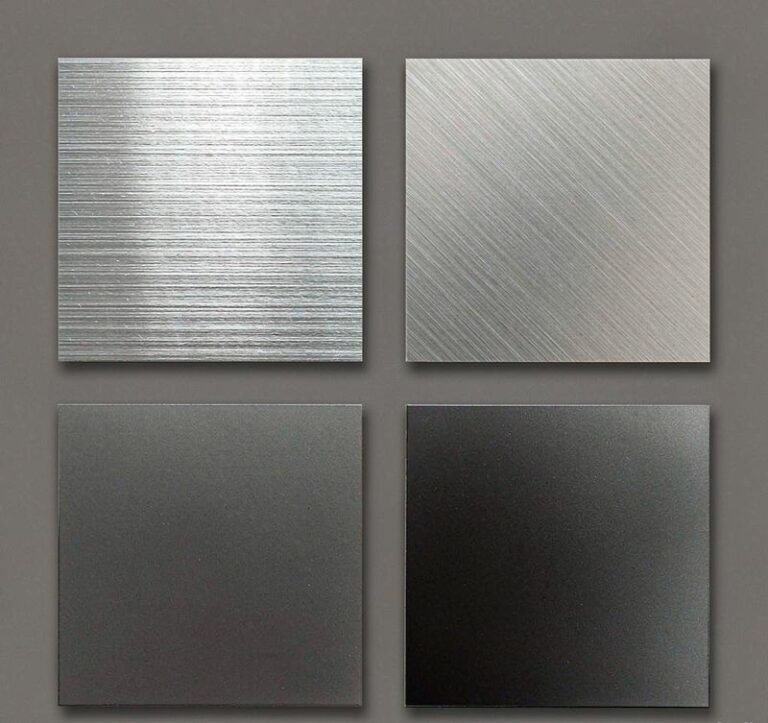
Surface finish codes look similar but mean different things across the four systems. The most common finishes — mill, ” “brushed, anodized, powder-coated — are universal, but the quality-class codes are not. EN 12487 (anodizing) and EN 485-1 ” “(general finishes) define classes differently from JIS H0601 (anodizing) and GB/T 3880 (general finishes). The risk is that a ” “mill finish labeled ‘AA Mill finish’ may not meet the EN 485-1 ‘Mill finish’ class.
| Surface Type | AA / ASTM B209 | EN 485-1 / EN 12487 | JIS H4000 / H0601 | GB/T 3880 |
|---|---|---|---|---|
| Mill finish (as-rolled) | Mill finish | Mill finish (untreated) | Mill finish (生地) | Mill finish (光面) |
| Chemically cleaned / etched | Chem cleaned | Etched (chemical) | Etched (化学処理) | 化学清洗 |
| Brushed / satin | Brushed | Brushed (satin) | Hairline (HL) | 拉丝 (拉丝面) |
| Anodized (clear) | Class 1 clear | Anodized (E6/E0) | Anodized (透明) | 阳极氧化 (本色) |
| Anodized (color) | Class 2 color | Anodized colored | Anodized color | 阳极氧化 (着色) |
| Powder coated | Coated | Powder-coated | Powder coating | 喷涂 |
| Bright polished | Bright finish | Polished (mirror) | Buffed (鏡面) | 镜面抛光 |
| Embossed / stucco | Stucco embossed | Embossed | Stucco | 压花 |
For architectural projects, align finish codes with the spec standard. If your spec says ‘anodized to Class 1 clear,’ ” “the mill needs to know whether you mean EN 12487 Class 1, JIS H0601 ‘clear,’ or AA ‘Class 1 clear.’ All three are different ” “thicknesses and chemistries. Our aluminum anodizing ” “guide covers these in detail.
Heat Treatment / Temper Designation Alignment
Temper designations are the most internationally harmonized nomenclature in aluminum — the H (strain-hardened) and T ” “(heat-treated) systems are virtually identical across AA, EN, JIS, and GB. The table below shows how the principal tempers align.
| Process / Condition | AA / ASTM | EN (Europe) | JIS (Japan) | GB (China) |
|---|---|---|---|---|
| Annealed (soft) | O | O | O | O |
| Strain-hardened ½ hard | H14 | H14 | H14 | H14 |
| Strain-hardened ¾ hard | H16 | H16 | H16 | H16 |
| Fully hard | H18 | H18 | H18 | H18 |
| Strain-hardened + stabilized | H32 / H34 | H32 / H34 | H32 / H34 | H32 / H34 |
| Solution + natural aging | T4 | T4 | T4 | T4 |
| Solution + artificial aging (peak) | T6 | T6 | T6 | T6 |
| Stress-relieved (stretched) | T651 | T651 | T651 | T651 |
| Over-aged (SCC resistant) | T73 / T7351 | T73 | T73 | T73 |
| Thermally refined | T7 | T7 | T7 | T7 |
The only meaningful differences are in subscript digits: H32 (strain-hardened + stabilized) may have ” “slightly different final strength targets depending on standard, and T7351 (over-aged for SCC resistance) is rare in JIS ” “designations. If you order ‘T6’ from any region, you get the same solution + artificial-age heat treatment — and approximately ” “the same peak-aged strength.
Certification Documents: EN 10204 vs ASTM A1057 vs JIS vs GB
The mill certificate is the legal proof that the material in your hands matches the material in your purchase order. ” “Each region uses its own certification framework, but the levels are roughly parallel:
| Document Type | Standard | Issued By | Content / Assurance Level |
|---|---|---|---|
| Mill Test Certificate 3.1 | EN 10204 (EU) | Mill’s QC department | Composition + mechanical properties; validated by mill, not independent |
| Mill Test Certificate 3.2 | EN 10204 (EU) | Independent inspector (e.g., SGS, BV) | Composition + properties; validated by independent 3rd party |
| Test Report 2.1 | EN 10204 (EU) | Mill | Statement of compliance with order, no test results |
| Test Report 2.2 | EN 10204 (EU) | Mill | Statement of compliance + general test results (non-specific) |
| MTR (Mill Test Report) | ASTM A1057 (USA) | Mill | Composition + mechanical properties; basis for ASTM acceptance |
| Inspection Certificate | JIS G0415 / G0416 | Mill or independent | Composition + properties; mirrors EN 10204 levels |
| Quality Certificate | GB/T 3275 / 3276 | Mill | Composition + properties; common Chinese mill practice |
| Certificate of Conformance (CoC) | Various | Mill | Statement that material meets the order spec |
For B2B international orders, EN 10204 3.1 is the de facto standard — recognized worldwide as the ” “baseline certification. For regulated applications, EN 10204 3.2 (independent third-party inspection by ” “SGS, BV, TÜV, DNV, or Lloyd’s) adds an extra layer of assurance. US defense may require DFARS 252.225-7014 ” “compliance in addition to the MTC; EU pressure equipment (PED) requires CE marking plus EN 10204 3.1 or 3.2.
How to Convert a Mill Cert from One Standard to Another
You cannot convert a mill cert — you can only cross-reference values. The mill is responsible for stating the ” “cert standard, and the buyer is responsible for verifying that the values meet the buyer’s spec. Here is a step-by-step workflow:
- Identify the issuing standard. Look at the cert header. It will say ‘GB/T 3190 + GB/T 3880’ or ‘ASTM B209 + ” “EN 10204 3.1’ or ‘JIS H4000 + EN 10204 3.1’. Note exactly which product standard applies.
- Cross-check element-by-element. For each of the 8–11 elements listed (Si, Fe, Cu, Mn, Mg, Cr, Zn, Ti, others, ” “Al), compare the measured value against your target standard’s allowed range. Flag any element that falls outside.
- Verify mechanical properties. Check that yield strength, tensile strength, and elongation are stated for ” “the test orientation your design requires (L / LT / ST). Verify units: MPa vs ksi vs kgf/mm².
- Check dimensional tolerances. Confirm the cert’s thickness, width, and length are within your spec’s ” “tolerance band. If the cert lists ‘thickness 3.05 mm,’ and your spec is 3.00 ± 0.05 mm, you are in tolerance; if the cert lists ” “‘thickness 3.10 mm’ and your spec is EN 485-3 ± 0.06 mm, you are still in tolerance; if your spec is EN 485-4 ± 0.04 mm, you ” “are out.
- Accept or reject. If everything is in tolerance, file the cert with your goods-received note. If anything ” “is out, either return the batch, request a replacement, or accept the variance in writing with the mill’s signature.
Never edit or ‘interpret’ a mill cert — the values are what they are. If you need a different cert standard, request a ” “re-test or a different batch from the mill.
Buyer Workflow: Cross-Standard Acceptance
A practical 7-step workflow for accepting material whose cert standard differs from your purchase-order standard:
- Receive cert with goods. Note the issuing standard (e.g., GB/T 3190 + GB/T 3880).
- Convert to your units. If cert is in kgf/mm², multiply by 9.81 to get MPa. If in ksi, multiply by 6.895.
- Cross-reference composition. Use the 6061 cross-reference table above (or the equivalent for your alloy) to ” “compare element-by-element against your spec standard.
- Cross-reference mechanical properties. Same approach — verify yield, tensile, elongation are within your ” “spec’s acceptable range, accounting for test orientation.
- Decide acceptance. If everything aligns, accept the batch and file the cert. If one or two elements diverge, ” “consider whether the divergence is acceptable for your end-use (e.g., higher Fe is fine for non-aerospace, problematic for ” “tight-tolerance aerospace).
- Document the decision. If you accept a divergent batch, sign a deviation memo specifying the variance, the ” “rationale, and the mill’s counter-signature. This protects you in any future audit.
- Feed back to procurement. If the divergence is structural (e.g., the mill routinely supplies Fe 0.6% when ” “your spec is 0.5%), update the spec to the closer of the two limits, or switch mills. Communicate the discrepancy clearly.
Top 5 Mistakes Buyers Make With Multi-Standard Sourcing
After more than a decade of supplying aluminum to buyers across 60+ countries, the same five mistakes come up again and again. ” “Knowing them in advance saves you rework, delays, and rejected batches.
| # | Mistake | What Goes Wrong | How to Avoid |
|---|---|---|---|
| 1 | Specifying ‘A6061’ (JIS) when the buyer needs ASTM acceptance | Mill provides JIS cert; buyer’s QC team rejects it because ‘A6061’ isn’t in their system | Always confirm: cert standard = spec standard. If mixing, require EN 10204 3.1 + supplementary test report |
| 2 | Assuming 6061 from any country is identical | Fe ≤ 0.70% (ASTM/JIS/GB) vs Fe ≤ 0.50% (EN) — aerospace specs may reject the higher-Fe variants | Match the element tolerance to your application; specify tighter limits if required |
| 3 | Ignoring orientation requirements for plate | Buyer orders 12 mm plate; receives longitudinal values but design used short-transverse | Specify ST values explicitly when thick plate is used in through-thickness load |
| 4 | Confusing wrought and cast designations | Ordering EN AW-6061 (wrought) when the part requires EN AC-42100 (cast A356) | Check the product form: AW = wrought (sheet/extrusion/bar), AC = cast |
| 5 | Not requesting EN 10204 3.1 vs accepting generic CoC | Generic CoC may not include actual batch test data — buyer can’t verify compliance | Always require EN 10204 3.1 (or ASTM A1057 MTR equivalent) with measured composition |
The common thread: specify the standard explicitly on every order, in every email, and on every cert. ” “Ambiguity is the buyer’s enemy. A clear spec — alloy family, temper, dimensions, tolerance, cert standard — eliminates 90% of ” “these problems before they start.
REACH / RoHS / DFARS — What You Need To Know
Beyond product standards, three regulatory frameworks matter for international aluminum buyers:
| Regulation | Scope | Aluminum Relevance | Cert You Need |
|---|---|---|---|
| REACH (EU 1907/2006) | Chemical substances in EU | Aluminum alloy chemistry — declare any SVHCs > 0.1% w/w | REACH declaration + SDS |
| RoHS 3 (EU 2015/863) | Electrical / electronic equipment | Pure aluminum (1xxx) generally exempt; check alloy-specific substance content | |
| DFARS 252.225-7014 | US defense procurement | Aluminum must NOT be sourced from covered countries (Russia, China on restricted list) | DFARS clause + country-of-origin declaration |
| Buy American Act (BAA) | US federal procurement | Domestic or designated-country melt/cast required | BAA compliance cert |
| Conflict Minerals (Dodd-Frank 1502) | 3TG only (not Al) | Not directly applicable to aluminum, but may be required for assemblies | CMRT / RMI template |
For DFARS specifically: aluminum and aluminum alloys are listed as ‘covered material’ under DFARS 252.225-7014. ” “Defense buyers must source from non-covered countries (not Russia, Iran, North Korea, etc.) or from qualifying countries under ” “specialty metals clauses. A GB/T cert alone is not sufficient — the buyer must verify the melt/cast location. ” “For REACH, aluminum itself is not classified as hazardous, but specific alloying elements (Be, Pb, Cd in some grades) may be ” “subject to declaration if above threshold.
Our aluminum recycling and sustainability guide ” “covers broader environmental and regulatory questions.
Practical Reference Card (Print & Pin)
Pin this card to your desk or save it on your phone. It maps common B2B aluminum orders across the four standards — ” “what to write on a US order, an EU order, a Japanese order, and a Chinese order for the same end-product.
| Need This | Order As (USA) | Order As (EU) | Order As (Japan) | Order As (China) |
|---|---|---|---|---|
| General structural sheet, T6 | 6061-T6 sheet, ASTM B209 | EN AW-6061 T6 sheet, EN 485-2 | A6061-T6 plate, JIS H4000 | 6061-T6 sheet, GB/T 3880 |
| Marine plate, H116 | 5083-H116 plate, ASTM B928 | EN AW-5083 H116 plate, EN 485-2 | A5083 H116 plate, JIS H4000 | 5083-H116 plate, GB/T 3880 |
| Architectural extrusion, T5 | 6063-T5 extrusion, ASTM B221 | EN AW-6063 T5 profile, EN 12020 | A6063-T5 extrusion, JIS H4100 | 6063-T5 profile, GB/T 6892 |
| Aerospace plate, T7351 | 7075-T7351 plate, AMS-QQ-A-250/12 | EN AW-7075 T7351 plate, EN 485-2 | A7075-T7351 plate, JIS H4000 | 7075-T7351 plate, GB/T 3880 |
| Deep-drawing sheet, O | 3003-O sheet, ASTM B209 | EN AW-3003 O sheet, EN 485-2 | A3003-O sheet, JIS H4000 | 3003-O sheet, GB/T 3880 |
| Cast pump housing | A356.0-T6 cast | EN AC-42100 T6 | AC4C-T6 | ZL101A-T6 |
Save the URL of this guide to your procurement team’s shared reference folder. When a new buyer asks ‘what do I order?’, ” “you can refer them to this card.
Need Multi-Standard Aluminum Sourcing Support?
HXM Aluminum ships with EN 10204 3.1 certs to ASTM, EN, JIS, or GB reference standards. Send your spec and we’ll confirm alloy, temper, dimensions, tolerance, cert level, and lead time within one business day.
Frequently Asked Questions — Aluminum Standards Comparison
Are ASTM 6061 and EN 6061 the same alloy?
Yes, EN AW-6061 and ASTM 6061 refer to the same alloy chemistry, but the composition limits are not perfectly identical. EN 573-3 (the EU composition standard) sets Iron ≤ 0.50%, while ASTM B209 / GB/T 3190 / JIS H4040 allow Iron ≤ 0.70%. All four standards agree on Magnesium 0.80–1.20%, Silicon 0.30–0.80%, and other major elements. For most structural and architectural applications the two are interchangeable; for tight aerospace or rail specs, require the buyer specify the exact limit and confirm the mill can meet it.
What is the difference between AA 6061 and A 6061?
AA 6061 is the Aluminum Association (USA) four-digit designation. A 6061 is the JIS (Japanese Industrial Standards) designation — the leading ‘A’ indicates wrought aluminum. They are recognized internationally as the same alloy family, and the cross-reference tables in JIS H4040 explicitly list A6061 ↔ AA6061 ↔ EN AW-6061 ↔ GB 6061.
Can I substitute a GB/T certified aluminum for ASTM?
For most non-critical applications, yes. GB/T 3190 chemistry and GB/T 3880 sheet tolerances closely mirror ASTM B209 / EN 485. However, for regulated applications (US defense, EU pressure equipment PED, aerospace OEM) you typically need: (1) EN 10204 3.1 cert, (2) batch-specific test results stated in the same units as your spec (MPa, not kgf/mm²), and (3) confirmation that the country’s regulatory regime is accepted by your end-market. Always ask your buyer or end-customer before substituting cert standards.
Which standard is used in EU aerospace?
EU aerospace uses a mix of EN standards (e.g., EN 2004, EN 2076, EN 3550) for material, EN 10204 3.1 / 3.2 for certification, plus company-specific specifications from Airbus, Safran, Leonardo, and Rolls-Royce. The four-digit wrought designation follows EN AW-XXXX. For US-built parts shipped to EU, dual certification (AMS + EN) is common.
Which standard is used in Japanese automotive?
Japanese automotive OEMs (Toyota, Honda, Nissan, Mazda, Subaru) primarily use JIS H4000 (sheet/plate), JIS H4040 (rod/bar), JIS H4100 (extrusions), and JIS H5202 (cast). For sheet the JIS prefix ‘A’ is standard (A5052, A6061). They also accept EN 10204 3.1 certs and ASTM B209 spec for North American platforms.
How do I convert a mill test certificate from one standard to another?
You cannot convert a cert — you can only cross-reference the values. Steps: (1) Identify the issuing standard (e.g., GB/T 3190). (2) Verify element-by-element against your target standard (ASTM B209). (3) If any element falls outside the target standard’s range, request a new batch or accept the variance in writing. (4) For mechanical properties, ensure test orientation, sample geometry, and strain rate match your spec. The mill is responsible for stating the cert standard — never edit or ‘interpret’ it.
What is EN 10204 3.1?
EN 10204 is the European standard defining metallic product inspection document types. Type 3.1 is a mill test certificate in which the mill’s QC department validates the product’s compliance with the order and the specified technical requirements, supported by actual test results (composition + mechanical properties). Type 3.2 adds independent third-party validation. For B2B aluminum orders EN 10204 3.1 is the default; for safety-critical or defense applications, ask for 3.2.
Does Chinese 6061-T6 meet AMS-QQ-A-250/11?
AMS-QQ-A-250/11 is the US aerospace specification for 6061-T6 sheet and plate. A Chinese mill producing to GB/T 3880 may or may not meet the AMS spec — AMS has tighter composition limits (lower Fe and Zn) and stricter batch testing requirements. Simply having a GB/T 3880 certificate does NOT mean AMS-QQ-A-250/11 compliance. For aerospace, request an AMS cert from a qualified mill, or ask the supplier to provide a side-by-side comparison and accept any deviations in writing.
Are JIS A2014 and ASTM 2014 identical?
No. JIS A2014 and AA 2014 are the same Al-Cu alloy family (4.4% Cu), but JIS sets tighter impurity limits for some elements (notably Fe ≤ 0.30% vs AA ≤ 0.50%, Si ≤ 0.50% vs AA ≤ 0.90%). They are interchangeable for most general structural applications, but for aerospace the buyer should confirm that the JIS variant meets the AMS-QQ-A-250/3 spec, which is based on AA 2014 chemistry.
What is the difference between EN AW-6061 and EN AC-42100?
EN AW-6061 is a wrought aluminum designation (sheet, plate, extrusion, bar, tube). EN AC-42100 is a cast aluminum designation (sand cast, permanent mold, die cast), chemically similar to AA A356.0 (AlSi7Mg0.3). They are not interchangeable — wrought products are worked from billet; cast products are poured from melt. Mixing them up is a common sourcing mistake.
Does HXM Aluminum supply certs per multiple standards?
Yes. HXM Aluminum supplies mill test certificates per EN 10204 3.1, with composition and mechanical properties tested and reported. We can issue the cert referencing EN, ASTM, JIS, or GB product standards depending on the buyer’s destination. For aerospace, defense, or pressure-equipment applications, we arrange 3.2 independent inspection (SGS / BV / TÜV). Contact us with your spec and we will confirm the certification level and standard for your order.
Which alloy designation is safest for global commerce?
The safest cross-border designation is the AA four-digit number (UNS cross-reference) because it is recognized in all major regions. When issuing a purchase order, always state the AA number plus the target product standard (ASTM B209, EN 485, JIS H4000, or GB/T 3880) plus the cert standard (EN 10204 3.1 or equivalent). This avoids the ‘same alloy, four different certs’ problem and lets your supplier match the closest production line.
Master the Four-Standard Map — Source With Confidence
You now have the cross-reference map most international aluminum buyers build over years of trial and error. ” “Four systems (AA, EN, JIS, GB), one alloy family, slightly different chemistry limits, slightly different test orientations, ” “and a common cert framework via EN 10204 3.1. Use the reference card above, the FAQ section, and the comparison tables to ” “make every purchase order unambiguous.
For deeper dives into specific alloys and topics, here are the HXM resources that pair with this standards-comparison ” “overview:
- 6061 Aluminum Alloy Guide — composition, properties, applications
- 6063 Aluminum Alloy Guide — architectural extrusion alloy
- 7075 Aerospace Aluminum Complete Guide — high-strength aerospace alloy
- 6061-T6 Deep Dive: Properties, Heat Treatment, Uses
- Aluminum Mechanical Properties Chart: Strength, Hardness & Temper
- Aluminum Anodizing Complete Guide — surface finish standards
- How to Source Aluminum from China Guide
- Aluminum Price Trends & Market Guide 2026
- Aluminum Recycling & Sustainability Guide
For the standards-aware aluminum sourcing that protects your design, your cert, and your delivery schedule, partner with ” “HXM Aluminum. We hold MOQ at 1–3 metric tons, ” “lead time at 15–25 days, EN 10204 3.1 certs with every shipment, and reference standards across ASTM, EN, JIS, and GB. ” “Contact us today and tell us your spec.
Get a Cross-Standard Aluminum Quote Today
Tell us alloy, temper, dimensions, tolerance, and your required cert standard. We’ll match the closest production line, confirm lead time, and ship with EN 10204 3.1 documentation.