A wrong HS code on an aluminum shipment is not a paperwork nuisance — it can mean an unexpected anti-dumping duty of 30-60%+, a customs hold, or a penalties letter months after delivery. For procurement engineers importing plate, coil, extrusion, or foil, knowing the right code and the duty it triggers is as important as negotiating the unit price. This guide maps the aluminum HS code structure, shows typical import-duty outcomes by product form, flags the China extrusion anti-dumping landmines, and gives you a pre-shipment checklist.
Work through it before you request a quote, and pair it with our China sourcing guide and 2026 price-trends guide to build a realistic landed cost.
⚠️ Buyer Pain: Our extrusion shipment was hit with a 59% anti-dumping duty we never budgeted for — the supplier just wrote ‘aluminum profile’ on the invoice.
✅ HXM Solution: That is the classic trap. Extruded bars/rods/profiles from certain origins attract AD/CVD duties. Always confirm the 8-10 digit code (e.g. 7604.29) and the country-specific duty before booking. We list the codes and risk forms below.
What an HS Code Is — and Why It Controls Your Duty
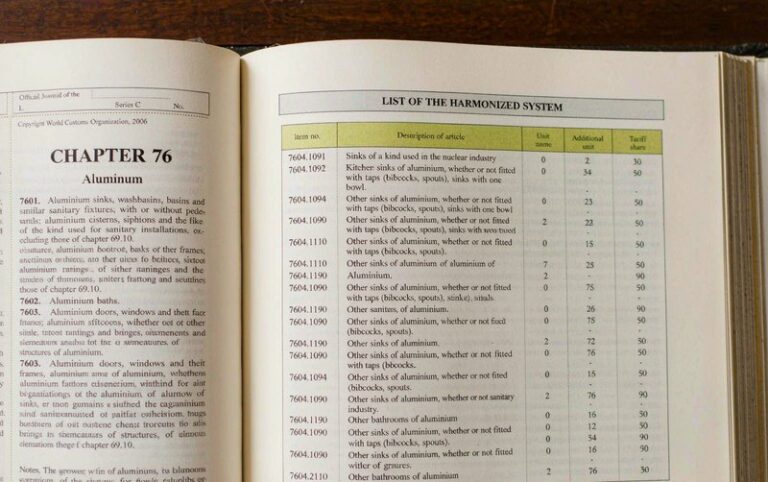
The Harmonized System (HS) code is a 6-digit international standard; most countries extend it to 8-10 digits for their own tariff schedules (HTS in the US, TARIC in the EU, HS in China). The first two digits are the chapter, the next four narrow the product. Aluminum lives almost entirely in Chapter 76.
Why it matters: the code — not the supplier’s description — is what customs uses to (a) determine the ad valorem duty rate, (b) trigger anti-dumping / countervailing (AD/CVD) duties, and (c) apply any tariff exclusions. A vague description like ‘aluminum part’ forces customs to guess, and they guess in the government’s favor.
Aluminum HS Codes by Product Form
| HS (6-digit) | Product form | Examples | Common duty risk |
|---|---|---|---|
| 7601.10 / 7601.20 | Unwrought aluminum (ingot, alloy) | Primary/secondary ingot | Usually low base duty |
| 7604.10 / 7604.29 | Bars, rods, profiles (incl. hollow) | Extruded profiles, rods | HIGH — AD/CVD on China |
| 7605.10 / 7605.29 | Wire | Welding wire, conductor | Low-moderate |
| 7606.12 / 7606.91 | Plate, sheet, strip >0.2mm | 5083 plate, 5052 sheet | Low base; check thickness split |
| 7607.11 / 7607.19 | Foil <=0.2mm | Packaging, capacitor foil | Low base |
| 7608.10 / 7608.20 | Tubes and pipes | Drawn tube, pipe | Low-moderate |
| 7609.00 | Tube/pipe fittings | Flanges, couplings | Low |
| 7610.90 | Structures (bridges, towers, doors) | Fabricated frames | May reclassify as built-up |
| 7616.99 | Other articles | Castings, machined parts | Depends on function |
| 7602.00 | Aluminum waste and scrap | Scrap, remelt | Often duty-free |
The thickness and alloy split matters even inside one heading. For 7606, foil and thin sheet are treated separately, and the 0.2 mm boundary decides the rate. Always give your supplier the exact gauge and alloy so the code is unambiguous. Baseline properties by alloy are in our mechanical properties chart.
How Import Duty Is Actually Calculated
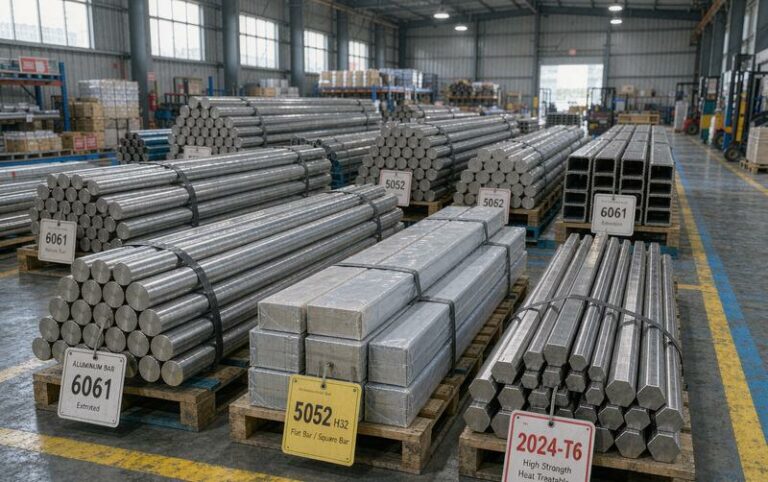
For most aluminum, duty is ad valorem — a percentage of the customs value. The customs value is normally CIF (cost + insurance + freight to the port), so freight and insurance inflate the duty base even though they are not ‘product’. The math:
Landed duty = Customs value (CIF) x base duty rate + any AD/CVD + VAT/GST (where applicable)
Three layers can stack on top of the base rate:
- Base MFN duty — the normal tariff (often 0-6% for aluminum in the US/EU).
- AD/CVD duties — country- and form-specific; can be the largest single cost.
- Section 301 / retaliatory tariffs — e.g. US tariffs on certain China-origin goods.
Never quote a customer a landed price from the base rate alone.
The China Extrusion Anti-Dumping Landmine
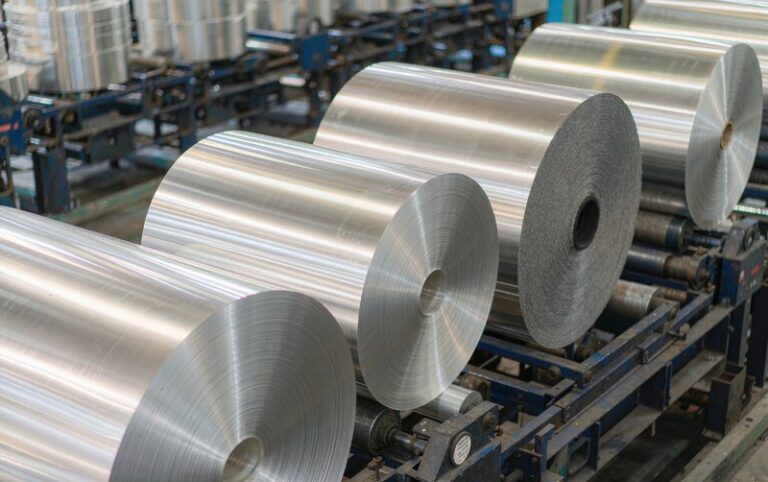
The single biggest duty surprise for aluminum buyers is anti-dumping and countervailing duties on extrusions (HS 7604.29) from China. Multiple jurisdictions (US, EU, Canada, Australia) maintain AD/CVD orders that can add 30% to over 60% on top of the base rate, depending on the producer and country.
Key buyer protections:
- Ask the supplier for the producer’s AD/CVD rate and case number before ordering extrusion.
- Confirm the exact 10-digit subheading — some downstream fabricated items escape the order if they are substantially transformed.
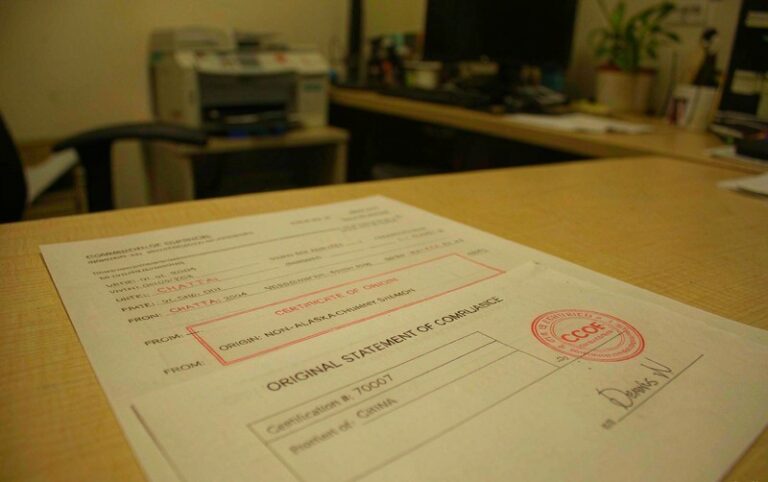
- Obtain a certificate of origin and keep it with the shipping documents.
Flat-rolled (7606) and foil generally carry far lower trade-remedy risk, which is why many buyers shift structural work to plate and sheet where feasible.
⚠️ Buyer Pain: ‘aluminum profile’ on the invoice triggered the full AD rate
Customs classified the line as 7604.29 China extrusion at the country-wide rate. Mitigation: specify the full 10-digit code, name the producer and AD case number, and document substantial transformation if claiming an exemption.
Regional Duty Snapshot (indicative, verify per shipment)
| Market | Base aluminum duty | Notable trade remedies | Tip |
|---|---|---|---|
| United States (HTS) | 0-3% on most forms | AD/CVD on China extrusions; Section 301 on some China goods | Use the full 10-digit HTS; check ADA/CVD case |
| European Union (TARIC) | 0-6% (many 0%) | AD on China extrusions; sustainability CBAM pending | Confirm TARIC subheading + origin |
| United Kingdom | 0-6.5% | Post-Brexit mirrors some EU remedies | Check UK Tariff code |
| Australia / Canada | 0-5% | Own AD orders on extrusions | Review ADC review dates |
| ASEAN / free-trade blocs | Often 0% intra-bloc | Preferential rules of origin apply | Claim FTA rate with origin proof |
These are indicative — rates change with trade policy and vary by exact subheading and origin. Treat this table as a red-flag list, not a quote. The only number that matters is the one on your customs broker’s entry summary for your specific code and origin.
Documents You Need Before the Container Sails

- Commercial invoice — exact product description, alloy, temper, dimensions, and value.
- Packing list — weights and package count for the entry.
- Certificate of origin — required to claim preferential rates or defend against AD.
- Mill test certificate (EN 10204 3.1) — proves alloy/temper for classification.
- Bill of lading / airway bill — evidence of shipment and Incoterm.
- HS code confirmation — agreed 8-10 digit code between you and the supplier.
Sloppy documents are the #1 cause of customs delays. Our sourcing guide covers Incoterms and how to keep the paper trail clean.
Five Classification Mistakes That Cost Buyers
- Vague descriptions (‘aluminum part’) — customs picks the highest applicable rate.
- Ignoring the thickness split in 7606 — foil vs sheet changes the code and rate.
- Assuming all aluminum is duty-free — extrusion AD/CVD can dominate cost.
- Forgetting country of origin — the same code can be 0% or 60% depending on where it was made.
- Skipping the mill cert — without alloy proof, classification is disputed.
Pre-Shipment Buyer Checklist
- Confirm the exact 8-10 digit code for your product form and alloy.
- Check the country-of-origin AD/CVD status for extrusions (7604.29).
- Model duty on a CIF basis, including freight and insurance.
- Request producer name, AD case number, and certificate of origin.
- Agree Incoterms and who handles customs brokerage.
- Keep the mill test certificate with the shipment file.
Do this once per product line and your future shipments clear predictably. Need help? Our team classifies your items and estimates landed duty as part of every quote.
How HXM Supports Compliant, Low-Surprise Imports
When you source from HXM, classification is part of the service, not an afterthought:
- Correct HS code stated on every commercial invoice and packing list.
- EN 10204 3.1 mill certificates standard, supporting clean classification.
- MOQ from 1 t, 15-25 day lead time for standard tempers across plate, sheet, coil, bar, and extrusion.
- Origin and documentation packaged for your customs broker.
- Landed-cost guidance so the quoted price reflects real duty, not just ex-works.
Pair this with our price-trends guide to time purchases and our surface finishing guide when finish affects classification.
Not sure what HS code or duty applies to your aluminum order?
Send us your product form, alloy, dimensions, and destination country. We return the correct HS code, estimated duty range, and a factory-direct quote with full documentation.
Frequently Asked Questions
What HS chapter is aluminum in?
Almost all aluminum articles fall under HS Chapter 76. The first two digits ’76’ identify the chapter; the following four digits (and country extensions to 8-10 digits) define the product form.
What is the HS code for aluminum plate and sheet?
Flat-rolled products over 0.2 mm are generally under HS 7606 (e.g. 7606.12 for alloy plate, 7606.91/7606.92 for other alloy sheet/strip). Foil 0.2 mm and under is 7607. Thickness decides the split.
What is the HS code for aluminum extrusions?
Bars, rods, and profiles (including hollow profiles) are under HS 7604 — typically 7604.10 for non-hollow and 7604.29 for other (including hollow) profiles. This is the code most exposed to anti-dumping duties.
Why did my aluminum extrusion get a 59% duty?
Likely anti-dumping (AD) and countervailing (CVD) duties on China-origin extrusions under 7604.29. These trade remedies stack on top of the base rate and vary by producer and country. Always confirm the AD case number before ordering.
Is aluminum foil duty-free?
Foil (HS 7607, 0.2 mm and under) usually carries a low base duty in most markets, with far less trade-remedy exposure than extrusions. Verify the exact subheading and origin for your shipment.
How is import duty calculated?
Duty is typically ad valorem on the customs (CIF) value: customs value x base rate, plus any AD/CVD and applicable VAT/GST. Freight and insurance are included in the CIF base, so they raise the duty too.
Does country of origin change the duty?
Yes, dramatically for extrusions and some other forms. The same HS code can be near 0% from one origin and 30-60%+ from another once AD/CVD applies. The certificate of origin is what proves it.
What documents do I need for aluminum customs clearance?
Commercial invoice, packing list, bill of lading, certificate of origin, and EN 10204 3.1 mill test certificate. Agree the exact HS code with your supplier before sailing.
Can I use a vague description like 'aluminum part'?
No. Customs will classify it unfavorably, often at the highest applicable rate, and may delay the shipment. Always use the precise product form, alloy, temper, and dimensions.
Are there tariffs beyond the base duty?
Yes — anti-dumping/countervailing duties, Section 301 or other retaliatory tariffs, and VAT/GST. The base MFN rate is only the starting point for landed cost.
How can I reduce aluminum import duty legally?
Use the correct, lowest-appropriate code; claim free-trade-agreement rates with valid origin proof; consider forms with lower remedy exposure (e.g. plate/sheet over extrusion where engineering allows); and keep full documentation.
Does HXM provide HS codes and documentation?
Yes. HXM states the correct HS code on invoices and packing lists, supplies EN 10204 3.1 mill certificates, and provides origin and landed-cost guidance with every quote.
What is the MOQ and lead time when sourcing from HXM?
MOQ from 1 metric ton per specification, lead time 15-25 working days for standard tempers, with full export documentation for smooth customs clearance.
Where can I learn more about sourcing aluminum from China?
Our China sourcing guide covers Incoterms, documentation, and landed-cost modeling, and the 2026 price-trends guide helps time purchases and budget duty.
Get your aluminum HS code and duty estimate before you buy
Send your product form, alloy, dimensions, and destination. We return the correct HS code, a duty range, and a factory-direct quote with full export documentation.