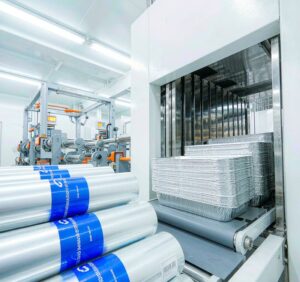
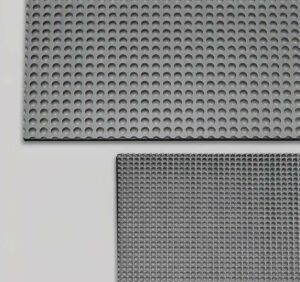
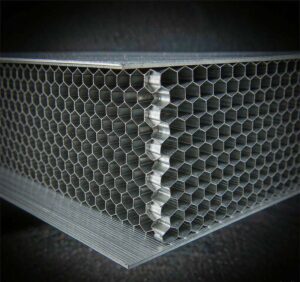
Aluminum foil is one of the most ubiquitous aluminum products in the world, found in every kitchen, pharmaceutical package, and industrial insulation system. From household food wrapping to high-tech electronics shielding, aluminum foil’s unique combination of barrier properties, formability, and recyclability makes it indispensable across industries. This comprehensive guide from HXM Aluminum explores the types, properties, manufacturing processes, and applications of aluminum foil products.
What Is Aluminum Foil?
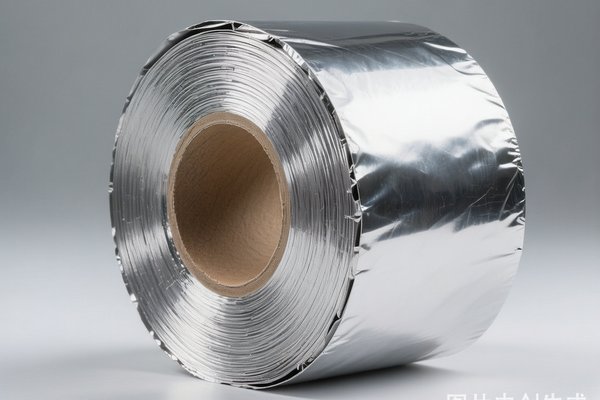
Aluminum foil is a thin sheet of aluminum with a thickness typically ranging from 0.006mm (6 microns) to 0.2mm (200 microns). According to international standards, rolled aluminum products below 0.2mm thick are classified as foil, while thicker products are classified as aluminum sheet. Foils below 0.025mm are typically produced by doubling and rolling two layers simultaneously, creating one bright (roll-contact) and one matte (interior) side.
Visit our aluminum foil product page for available alloys, thicknesses, and specifications.
Aluminum Foil Alloys
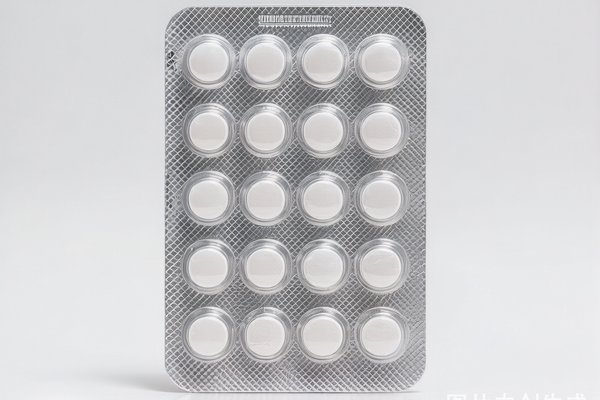
8011 Aluminum Foil (Most Common)
8011 is the most widely used aluminum foil alloy, containing small additions of silicon (0.5–0.9%) and iron (0.6–1.0%) that improve strength and ductility. It dominates food packaging, household foil, and container applications. Read our 8011 Aluminum Foil Guide for detailed specifications.
1235 Aluminum Foil
A minimum 99.35% pure aluminum alloy, 1235 foil offers excellent ductility, corrosion resistance, and electrical conductivity. Used in cable wrapping, capacitor foil, and pharmaceutical blister packaging.
3003 Aluminum Foil
Manganese-alloyed 3003 foil provides approximately 20% higher strength than pure aluminum foil while maintaining good formability. Used in semi-rigid containers, heat exchanger fin stock, and food service packaging. See our 3003 Aluminum Guide for more details.
8021 & 8079 Aluminum Foil
Specialty pharmaceutical and battery foil alloys. 8021 and 8079 offer excellent deep-drawing performance and are used for pharmaceutical blister packs, cold-forming foil, and lithium battery cathode current collectors.
Types of Aluminum Foil by Application
Household Foil
8011-O temper foil in 0.010–0.020mm thickness, used for cooking, wrapping, and food storage. Available in rolls of various widths for consumer and catering markets.
Container Foil
8011 or 3003 alloy foil (0.03–0.10mm) used for disposable food containers, takeaway trays, and airline meal containers. The foil is coated or laminated and then press-formed into containers.
Pharmaceutical Foil (PTP & Blister)
High-purity 8021/8079 foil used in Push-Through Packaging (PTP) and cold-form blister packs. Must meet strict pharmaceutical standards (USP, EP) for direct contact with medicines. Typically 0.020–0.045mm thick with one-side primer coating and one-side heat-seal lacquer.
Cable Foil
1235 or 8011 alloy foil (0.015–0.050mm) used as moisture and electromagnetic shielding in communication cables and power cables. Usually supplied coated with plastic film for cable wrapping.
Insulation Foil
Used in building insulation systems, HVAC duct insulation, and industrial pipe wrapping. Foil-scrim-kraft (FSK) and foil-woven cloth laminates provide thermal radiation barriers and vapor retardation.
Battery Foil
A rapidly growing application. Aluminum foil serves as the cathode current collector in lithium-ion batteries. Typically 1060, 1070, or 1235 alloy at 0.010–0.020mm thickness with extremely tight thickness tolerance (±0.001mm) and high surface cleanliness requirements.
Decorative Foil
Color-coated or printed foil used for gift wrapping, cigarette packaging, chocolate wrapping, and cosmetic containers. Hot-stamping foil uses vacuum-deposited aluminum on carrier films.
Key Properties of Aluminum Foil
- Barrier properties: Aluminum foil is virtually impermeable to moisture, gases, light, and microorganisms — the most complete barrier of any flexible packaging material
- Heat conductivity: Excellent thermal conductivity makes it ideal for cooking, grilling, and heat sealing applications
- Heat reflectivity: Reflects up to 95% of radiant heat, making it effective for insulation
- Formability: Can be dead-folded (retains folded shape without springback), deep-drawn, and embossed
- Non-toxic & hygienic: Safe for direct food contact; does not harbor bacteria
- Recyclability: 100% recyclable without loss of quality; recycling requires only 5% of the energy needed for primary production
- Electrical conductivity: Used for EMI/RFI shielding in electronics and cable applications
Aluminum Foil Manufacturing Process
- Casting: Aluminum ingots are melted and cast into large slabs (or continuously cast into strips)
- Hot rolling: Slabs are heated and rolled down to approximately 3–5mm thickness, forming aluminum coil
- Cold rolling: Further rolled at room temperature to 0.3–0.8mm (intermediate foil stock)
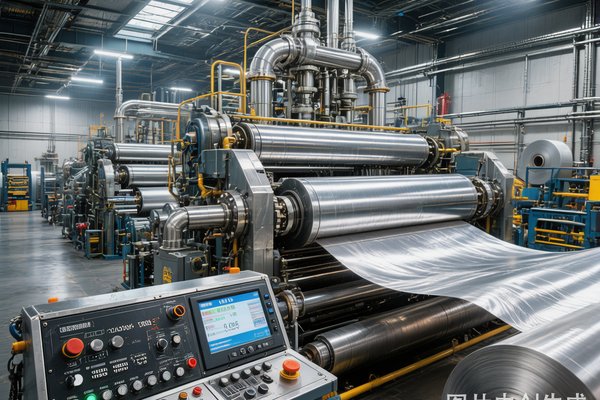
- Foil rolling: Precision rolling to final foil thickness (0.006–0.2mm) using specialized foil mills with double-reduction passes for thin gauges
- Annealing: Heat treatment to achieve the desired temper (soft/O temper for most packaging applications)
- Slitting & packaging: Foil is slit to customer-specified widths and packaged on cores for shipment
For more details on aluminum processing, see our Aluminum Processing Technology Guide.
Aluminum Foil vs Tin Foil
Despite common usage, modern “tin foil” is actually aluminum foil. True tin foil has not been commercially produced since the 1940s. Aluminum foil replaced tin foil because it is cheaper, more formable, and non-toxic. For the full story, read our article on Tin Foil vs Aluminum Foil.
Aluminum Foil Specifications
| Parameter | Typical Range |
|---|---|
| Alloy | 8011, 1235, 3003, 8021, 8079 |
| Temper | O (soft), H14, H18, H19, H22, H24 |
| Thickness | 0.006 – 0.20 mm |
| Width | 10 – 1600 mm (custom slitting) |
| Core ID | 76, 150 mm standard |
| Coil Weight | 100 kg – 3000 kg |
| Surface | Bright/matte, one-side coated, laminated |
How to Choose Aluminum Foil for Your Application
- Identify the end use: Food packaging, pharmaceutical, industrial, or decorative — each has specific alloy and surface requirements
- Select alloy: 8011 for general use; 1235 for high-purity/cable; 8021/8079 for pharma; 3003 for semi-rigid containers
- Specify thickness: 6–9μm for flexible packaging lamination; 10–20μm for household foil; 30–100μm for container foil
- Choose surface treatment: Plain, coated (primer/lacquer), laminated (PET/PE/PP), or printed
- Compliance requirements: FDA, EU 10/2011 for food contact; USP/EP for pharmaceutical; RoHS for electronics
- Verify supplier capability: Cleanroom packaging for pharma foil, tight thickness tolerance for battery foil, consistent lot-to-lot quality
Frequently Asked Questions
Is aluminum foil safe for food?
Yes. Aluminum foil is FDA-approved and EU-compliant for direct food contact. It does not react with most foods and provides an excellent barrier against contamination. Acidic or salty foods may cause minor aluminum migration, but levels remain well within safety limits.
Can aluminum foil be recycled?
Yes, aluminum foil is 100% recyclable. However, foil contaminated with food waste should be cleaned before recycling. Many municipalities accept clean aluminum foil in recycling programs. Recycling foil uses only 5% of the energy needed for primary aluminum production.
What is the difference between hard and soft foil?
Hard foil (H18/H19 temper) has been fully strain-hardened without annealing — it is stiff, strong, and springy. Soft foil (O temper) has been fully annealed — it is flexible, easily dead-folded, and formable. Most packaging applications use O temper foil.
Conclusion
Aluminum foil is a remarkably versatile material that plays critical roles across food packaging, pharmaceutical, electronics, construction, and energy storage industries. Understanding alloy selection, thickness requirements, and surface treatments is essential for specifying the right foil for each application.
HXM Aluminum supplies aluminum foil in all common alloys from 0.006mm to 0.20mm with various surface treatments. With comprehensive quality testing, custom specifications, and food-grade/pharmaceutical-grade compliance, we are your trusted aluminum foil manufacturer. Contact us for a quotation.
Related reading: 8011 Aluminum Foil | Tin Foil vs Aluminum Foil | Aluminum Gauge Thickness Guide | Melting Point of Aluminum | Aluminum Processing Technology