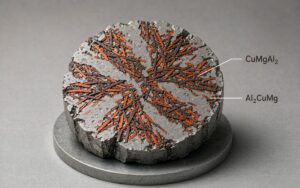
If your structure lives in saltwater, 5086 and 5083 aluminum are the two names you will see on every marine bill of materials. Both are 5xxx Al-Mg alloys, both are non-heat-treatable, and both laugh at the corrosion that destroys steel in a few seasons. But they are not
interchangeable: 5083 carries more magnesium and more strength, while 5086 trades a little strength for better formability and weldability. Spec the wrong one and you either over-pay for strength you do not need or under-build a hull that cracks at a welded seam.
This guide gives boat builders, shipyards, and procurement engineers the decision data: magnesium content, typical properties by temper, seawater corrosion, weld sensitization, and the real sourcing terms. For a deeper dive on the stronger grade, see our 5083 marine grade guide, and for the 5052 sibling see the 5052 vs 5083 comparison.
⚠️ Buyer Pain: The yard quoted 5083-H321 for the hull but our superstructure needs complex curved forming — can we switch to 5086?
✅ HXM Solution: Often yes. 5086 forms more easily and welds cleanly, making it ideal for superstructures and curved topsides. Keep 5083-H116/H321 for the main hull plating where maximum strength and seawater resistance matter.
Both Are 5xxx Al-Mg Marine Alloys — Strength Is the Difference
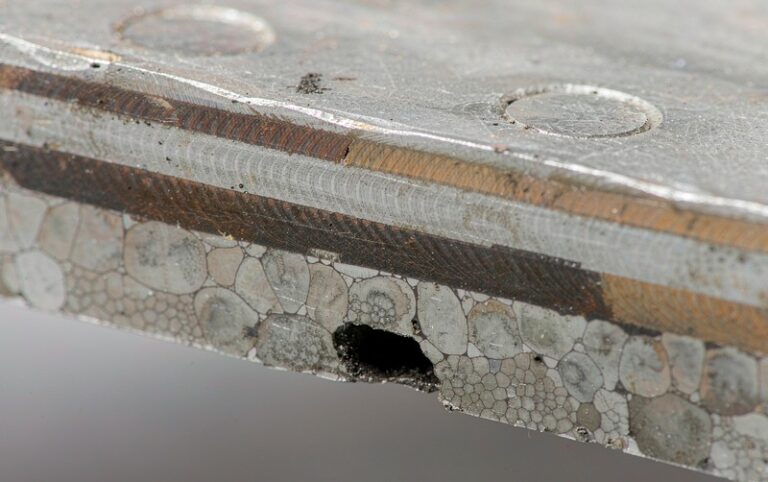
5083 and 5086 sit side by side in the 5xxx series, strengthened by magnesium in solid solution rather than by heat treatment. That makes them non-heat-treatable: you get strength from cold work (the H tempers) and from chemistry, not from aging ovens. The practical upside is huge for marine work — no heat-affected-zone softening on welding, and excellent as-welded strength.
The single chemical lever that separates them is magnesium. 5083 runs 4.0-4.9% Mg; 5086 runs 3.5-4.5% Mg. More magnesium means higher base strength and slightly better general corrosion resistance, but reduced formability and a sharper eye needed on weld sensitization. 5086, with its lower Mg, bends and forms more easily and is a touch more forgiving to weld in thin gauge.
Composition Comparison (nominal wt%)
| Element | 5083 | 5086 | Effect |
|---|---|---|---|
| Magnesium (Mg) | 4.0-4.9 | 3.5-4.5 | 5083’s higher Mg = more strength, less formability |
| Manganese (Mn) | 0.40-1.0 | 0.20-0.7 | Grain refiner; 5083 slightly higher |
| Chromium (Cr) | 0.05-0.25 | 0.10-0.25 | Strain-hardening / corrosion control |
| Silicon (Si) | 0.40 max | 0.40 max | Kept low for weld quality |
| Iron (Fe) | 0.40 max | 0.50 max | Impurity; lower is better |
| Copper (Cu) | 0.10 max | 0.10 max | Kept very low to protect seawater resistance |
| Zinc (Zn) | 0.25 max | 0.25 max | Minimal |
| Density (g/cm3) | 2.66 | 2.66 | Identical; weight is not a differentiator |
The low copper and iron are deliberate: copper in particular destroys seawater corrosion resistance, so both grades cap it at 0.10%. Compare baseline numbers across the family in our aluminum mechanical properties chart.
Typical Mechanical Properties by Temper
| Temper | Alloy | UTS (MPa) | YS (MPa) | Elong (%) | Marine use |
|---|---|---|---|---|---|
| O (annealed) | 5083 | 275 | 125 | 16 | Heavy formed parts |
| H116 / H321 | 5083 | 305 | 215 | 12 | Hull plate, LNG tanks |
| H32 | 5083 | 315 | 230 | 12 | General marine structurals |
| O (annealed) | 5086 | 260 | 115 | 18 | Deep-formed parts |
| H116 / H321 | 5086 | 290 | 205 | 12 | Superstructures, decks |
| H32 | 5086 | 300 | 215 | 12 | Formed marine sheet |
In any given temper, 5083 is roughly 5-10% stronger than 5086 on both UTS and yield. That gap is exactly why 5083-H116/H321 is the default for primary hull plating and 5086 is the go-to for secondary structure and anything that needs aggressive forming.
Seawater Corrosion: Both Excel, 5083 Edges Ahead
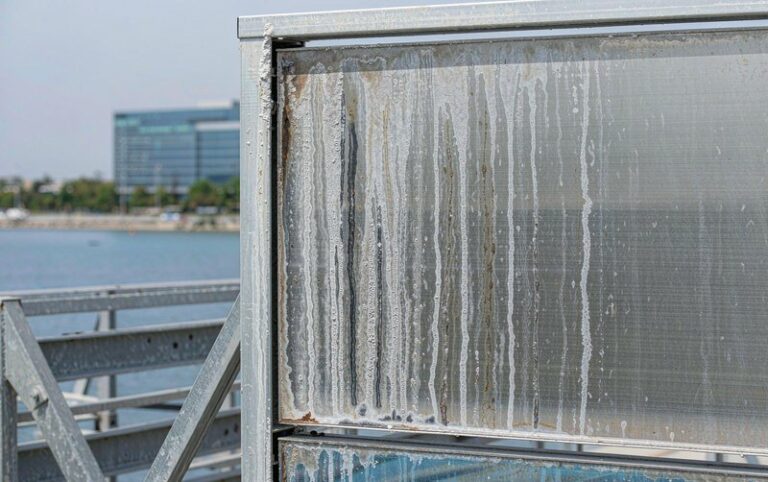
Both alloys show outstanding resistance to seawater, pitting, and exfoliation — the reason they replaced steel in modern hulls. 5083’s slightly higher magnesium and tight chemistry give it a marginal edge in long-term immersion corrosion, which is why classification societies (ABS, DNV, LR) routinely approve 5083-H116/H321 for hull plating.
The real corrosion risk in 5xxx marine alloys is sensitization: holding material in the 50-200 deg C range (e.g. during welding or hot forming) can precipitate beta phase (Mg2Al3) along grain boundaries, which is anodic and invites intergranular attack. High-Mg 5083 is more susceptible than 5086. Mitigation is well understood: use the stabilised H116/H321 tempers, control heat input, and avoid prolonged service in the sensitization window. Full detail in our corrosion resistance guide.
Weldability: Both Are Weldable, With Caveats
| Factor | 5083 | 5086 | Buyer takeaway |
|---|---|---|---|
| Weldability | Very good | Very good | Both MIG/TIG weld cleanly with 5xxx filler |
| Filler metal | 5356 / 5183 | 5356 / 5183 | 5183 for max strength on 5083 |
| Sensitization risk | Higher (more Mg) | Lower | 5083 needs H116/H321 + controlled heat |
| Formability | Good | Better | 5086 wins for complex curved shapes |
| Typical joint strength | High as-welded | High as-welded | No post-weld heat treatment needed |
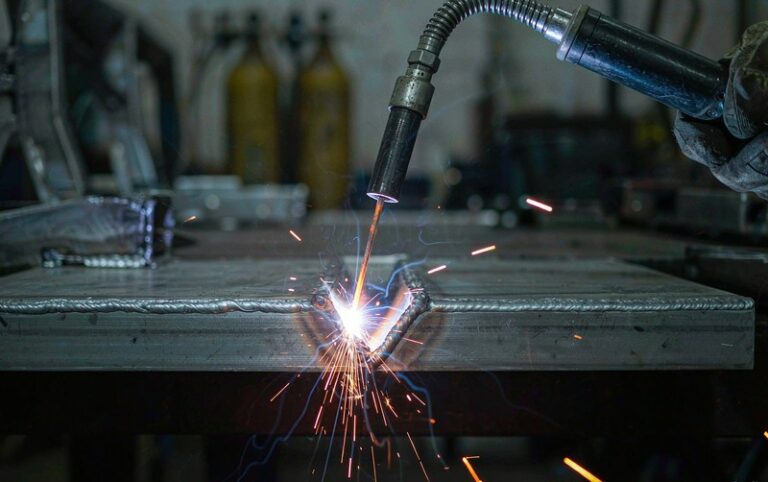
For welded marine structures, the standard filler is 5356, stepping up to 5183 when you must recover the last bit of 5083 joint strength. Because neither is heat-treatable, the weld keeps most of the parent strength — a major advantage over the 2xxx/7xxx aerospace alloys. Read the aluminum welding guide for filler selection and heat-input limits.
⚠️ Buyer Pain: intergranular cracks near a 5083 weld after a hot summer
Classic sensitization. Specify 5083-H116/H321 (not H32) for welded hulls, cap interpass temperature, and confirm your welder’s heat-input procedure. 5086 is more forgiving if the part is lightly loaded.
Formability and Fabrication
5086’s lower magnesium and slightly lower strength make it the easier alloy to bend, roll, and stretch-form — important for superstructures, wheelhouses, and curved topsides where 5083 would need larger radii or more springback correction. 5083 still forms well in the O and H32 tempers but demands more care on tight radii.
Both machine acceptably, though 5xxx alloys are gummy compared with 6xxx; keep tooling sharp and use generous coolant. For surface protection in a marine environment, painting or anodizing is common — see the surface finishing guide and anodizing guide.
Tempers You Will Actually Buy
- O — fully annealed, softest, best for deep forming; lowest strength.
- H32 — quarter-hard, strain-hardened and partially annealed; general marine sheet.
- H34 — half-hard; higher strength, less formability.
- H116 — strain-hardened for corrosion resistance; the marine standard for plate (no mechanical property specification, only corrosion test).
- H321 — strain-hardened then stabilized; same corrosion intent as H116 with a defined strength floor.
For any welded saltwater part, insist on H116 or H321, never plain H32/H34, and state it on the PO. The difference is corrosion qualification, not just strength.
Where Each Alloy Wins: Application Map
| Application | Preferred alloy | Why |
|---|---|---|
| Hull bottom / shell plate | 5083-H116/H321 | Max strength + seawater resistance |
| LNG / cryogenic tankage | 5083-O/H321 | Excellent low-temp toughness |
| Decks and superstructures | 5086-H116/H321 | Easier forming, lighter duty |
| Curved topsides / wheelhouses | 5086 | Better formability for complex shapes |
| Boat hulls (small craft) | 5083 or 5086 | Either; 5086 if heavily formed |
| Vehicle armor / patrol craft | 5083-H321 | Higher strength, weldable |
| Marine railings / fittings | 5086 / 5052 | Light duty, formable |
When in doubt, treat 5083 as the structural default and 5086 as the forming-friendly alternative. The 5052 grade (see our 5052 vs 5083 guide) is a lighter-duty cousin for less demanding marine trim.
Sourcing 5086 and 5083: MOQ, Lead Time, Certification
Both are high-volume marine grades with broad mill availability. Typical buyer terms from a China mill source like HXM:
- MOQ: 1-3 metric tons per specification; smaller lots for stock shapes.
- Lead time: 15-25 working days for standard H116/H321 tempers and plate sizes.
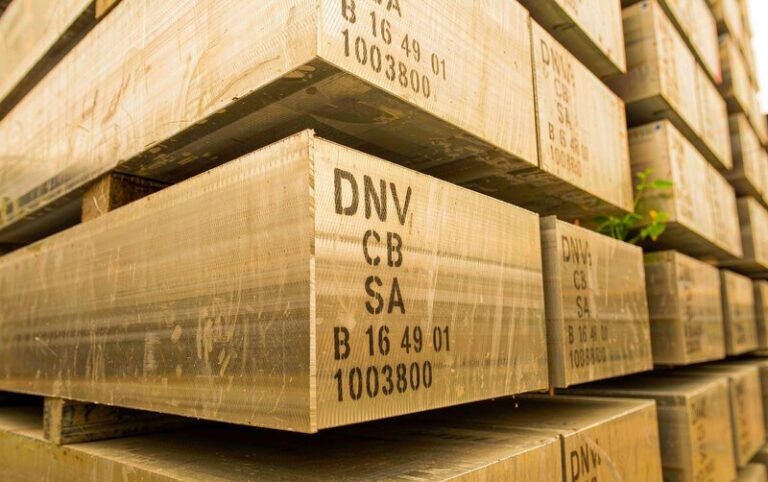
- Certification: EN 10204 3.1 mill certificate; marine approvals (ABS/DNV/LR) and ultrasonic testing on request.
- Forms: plate, sheet, coil, bar, and extruded sections. Confirm temper, thickness tolerance, and any classification approval on the inquiry.
Walk through landed-cost and Incoterms in our China sourcing guide before you commit to a shipment.
Five-Question Checklist to Pick the Right Alloy
- Is this primary hull / load-bearing structure? Yes → 5083-H116/H321.
- Does the part need complex curved forming? Yes → 5086 (easier to form).
- Will it be welded and live in saltwater? Yes → specify H116/H321 for either, control heat input.
- Is low temperature (cryogenic) service involved? Yes → 5083 for toughness.
- Is the duty light (trim, fittings, railings)? Yes → 5086 or even 5052.
If the answers point to heavy structure, 5083 is your alloy. If they point to forming and lighter duty, 5086 saves fabrication cost. Send us the drawing and we will confirm the temper and approvals.
Specifying 5083 or 5086 for your next vessel?
Send the drawing, temper, and classification requirement. We return an alloy/temper recommendation with EN 10204 3.1 certification and a factory-direct quote, typically within one business day.
Frequently Asked Questions
Is 5083 or 5086 stronger?
5083 is stronger in every temper — roughly 5-10% higher UTS and yield than 5086. That is why 5083-H116/H321 is the default for hull plating and 5086 for lighter, more-formed structure.
Which is better for boat hulls?
5083-H116/H321 for the main hull shell where strength and seawater resistance dominate. 5086 is excellent for superstructures, decks, and curved topsides that need easier forming.
Can 5086 replace 5083?
For secondary structure and formed parts, yes — 5086 forms and welds more easily. For primary hull plate under high load, 5083 is the safer specification.
Are both weldable?
Yes. Both are 5xxx alloys that MIG/TIG weld cleanly with 5356 (or 5183 for max 5083 joint strength) filler, and keep high as-welded strength because they are non-heat-treatable.
What is sensitization and why worry about it?
Sensitization is beta-phase (Mg2Al3) precipitation at grain boundaries from heating in the 50-200 deg C range, which invites intergranular corrosion. Higher-Mg 5083 is more prone; use H116/H321 tempers and control weld heat input.
H116 vs H321 — what is the difference?
Both are strain-hardened marine tempers qualified for corrosion resistance. H116 has no specified mechanical floor (corrosion test only); H321 is stabilized with a defined strength. For structural plate, H321 is often preferred.
Why not just use H32 or H34?
H32/H34 are not corrosion-qualified for marine welded service the way H116/H321 are. For any saltwater welded part, specify H116/H321 on the PO.
Which handles saltwater corrosion better?
Both are excellent; 5083 has a slight edge from its higher magnesium and tighter chemistry. Neither rusts like steel, but both need proper temper selection and coating for long life.
What tempers should I put on a purchase order?
State the full temper: 5083-H116, 5083-H321, 5086-H116/H321, etc. ‘5083’ alone lets a mill ship a non-marine temper that fails corrosion qualification.
Is 5083 good for cryogenic / LNG service?
Yes. 5083 retains excellent toughness at cryogenic temperatures and is widely used for LNG tankage and低温 marine structures.
What MOQ and lead time can I expect?
From HXM: MOQ 1-3 t per specification; 15-25 working days for standard H116/H321 tempers. EN 10204 3.1 is standard; ABS/DNV/LR approvals on request.
Can I get marine classification approval?
Yes. 5083/5086 in H116/H321 are approved by ABS, DNV, LR and others; request the relevant approval and mill certificate with your inquiry.
How do 5083/5086 compare with 5052 for marine use?
5052 is a lighter-duty 5xxx grade (2.2-2.8% Mg). Fine for trim, railings, and mild marine environments, but not a substitute for 5083/5086 in structural saltwater service. See our 5052 vs 5083 guide.
Where can I compare all three marine grades side by side?
Our 5083 marine guide, 5052 vs 5083 comparison, and the aluminum mechanical properties chart give the full 5xxx picture for spec writing.
Ready to order 5083 or 5086 marine aluminum?
Get EN 10204 3.1 certified plate and sheet, MOQ from 1 t, 15-25 day lead time, with marine approvals available. Tell us your temper and class requirement for a precise quote.