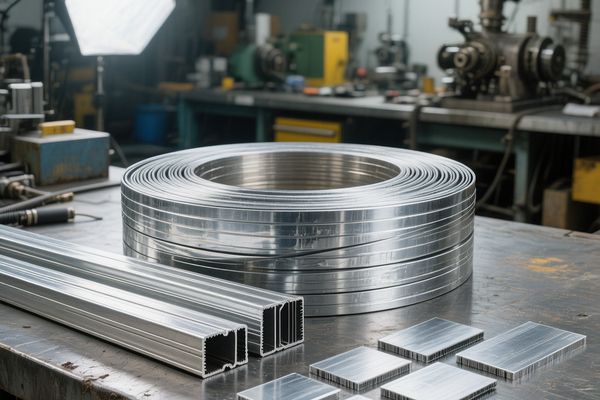
Aluminum strip is a narrow-width flat-rolled aluminum product that bridges the gap between aluminum coil and aluminum sheet. With widths typically ranging from 5mm to 500mm and thicknesses from 0.1mm to 3mm, aluminum strip serves critical functions in electronics, construction, automotive, and packaging industries. This guide from HXM Aluminum provides a comprehensive overview of aluminum strip products, their properties, and applications.
What Is Aluminum Strip?
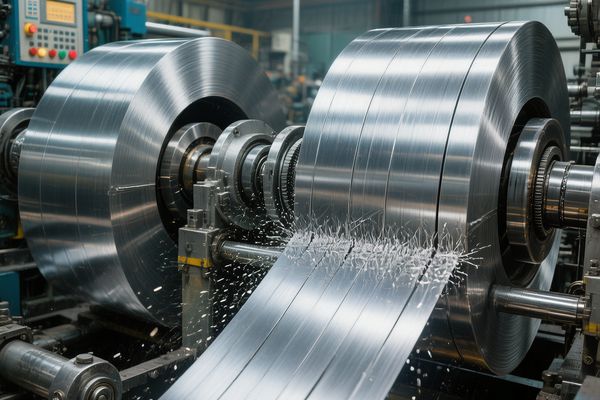
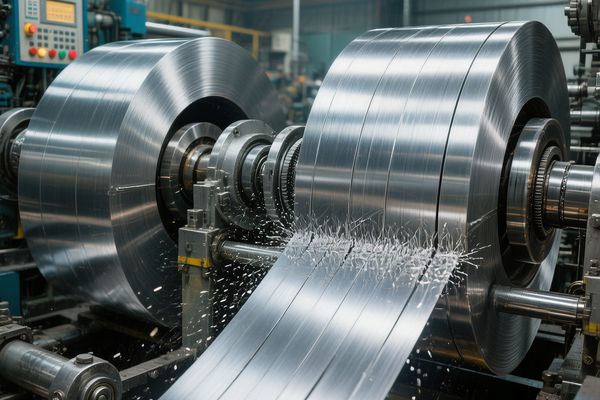
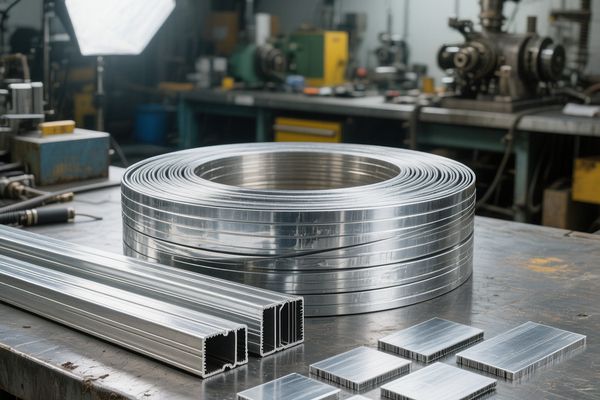
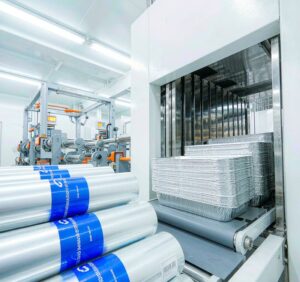
Aluminum strip (also called slit coil, aluminum ribbon, or aluminum band) is produced by slitting wider aluminum coil into narrow widths. The slitting process produces clean, precise edges and consistent width tolerances. Strips can be supplied in coil form or cut to length, depending on the application.
Visit our aluminum strip product page for available alloys and specifications.
Aluminum Strip Alloys
1060/1050 Aluminum Strip (Pure Aluminum)
High-purity aluminum strip offers excellent electrical conductivity, corrosion resistance, and formability. Used for electrical connectors, transformer windings, bus bar, and capacitors. See 1000 Series Aluminum for details.
3003 Aluminum Strip
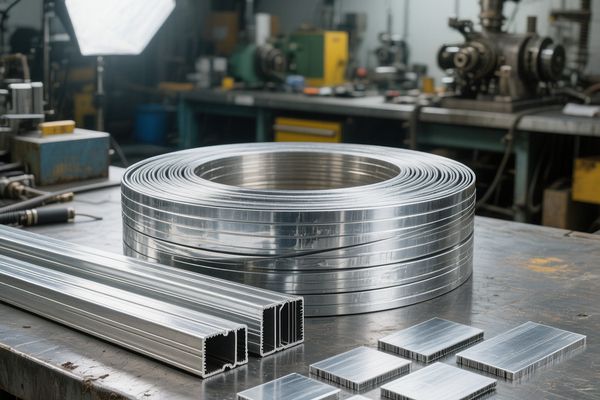
3003 strip combines good strength with excellent formability and corrosion resistance. A popular choice for roofing trim, gutters, flashing, and heat exchanger fins. Our 3003 Aluminum Guide covers full properties.
5052 Aluminum Strip
Marine-grade strip with superior corrosion resistance. Used in boat trim, marine hardware, chemical equipment, and outdoor applications. Read the 5052 Aluminum Guide for comprehensive data.
6061/6063 Aluminum Strip
Heat-treatable strip for structural and architectural applications. 6061 strip offers higher strength; 6063 strip provides better surface finish for visible applications. See our 6063 Guide and 6061-T6 Guide.
8011 Aluminum Strip
Specialty alloy strip for pharmaceutical packaging, food container lids, and cable wrapping. Related to our aluminum foil products. See 8011 Foil Guide for properties.
Surface Treatments for Aluminum Strip
- Mill finish: Standard as-produced surface for further processing
- Anodized: Electrochemical oxide layer for corrosion resistance and aesthetics; clear or colored
- Painted/PVDF coated: Weather-resistant coatings for architectural and outdoor use
- Laminated: Plastic film or paper lamination for packaging and electronics applications
- Polished/mirror: High-reflectivity finish for lighting and decorative applications
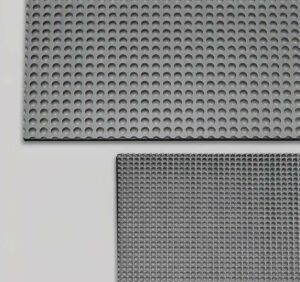
- Embossed: Textured surface for decorative or anti-slip purposes
Key Applications of Aluminum Strip
Electrical & Electronics
Aluminum strip is widely used for transformer windings, bus bar, cable shielding, capacitor foil, and electrical connectors. 1060 and 1070 strips with high electrical conductivity are standard in power distribution equipment.
Construction & Architecture
Roofing trim, flashing, drip edges, gutter linings, and wall cladding accessories are made from 3003 and 5052 aluminum strip. The material’s corrosion resistance and formability make it ideal for weather-exposed building components. See our 3003 Roofing Guide for related applications.
Automotive
Aluminum strip is used for heat exchanger fins, weatherstripping, trim molding, and radiator components in automotive manufacturing. The lightweight nature of aluminum contributes to fuel efficiency improvements.
Packaging
8011 and 3003 strips are formed into container lids, easy-open ends, and closure strips for food and beverage packaging. Related aluminum circles form the container bodies.
HVAC & Refrigeration
Thin aluminum strip (0.1–0.3mm) is used for fin stock in air conditioning and refrigeration heat exchangers. The material’s thermal conductivity and formability are critical for efficient heat transfer.
Industrial & Manufacturing
Aluminum strip serves as raw material for stamping, roll forming, and deep drawing operations producing clips, clamps, brackets, and various stamped components across industries.
Aluminum Strip Specifications
| Parameter | Typical Range |
|---|---|
| Alloy | 1050, 1060, 1100, 3003, 3004, 5052, 6061, 6063, 8011 |
| Temper | O, H12, H14, H16, H18, H22, H24, H26, T5, T6 |
| Thickness | 0.10 – 3.0 mm |
| Width | 5 – 500 mm |
| Inner Diameter | 75, 150, 200, 405 mm |
| Coil Weight | 50 kg – 3000 kg |
| Edge Condition | Slit (deburred), round edge, slit + skived |
| Tolerance (Width) | ±0.05 – ±0.5 mm (depending on width) |
| Tolerance (Thickness) | ±0.005 – ±0.05 mm (depending on thickness) |
Aluminum Strip vs Aluminum Coil
Aluminum strip is essentially narrow-width aluminum coil. The practical distinction is that coil typically refers to products wider than 500mm, while strip refers to narrower products slit to specific widths. Both share the same manufacturing process (casting → hot rolling → cold rolling → slitting), but strip requires an additional precision slitting step and tighter width tolerances.
How to Order Aluminum Strip
- Specify alloy and temper: Define based on mechanical properties, corrosion resistance, and formability requirements. See Temper Designations Guide
- Define thickness and width: Provide exact dimensions with tolerances. Standard or precision tolerances available
- Choose edge condition: Slit edge (standard), deburred, or special edge for safety-critical applications
- Select coil or cut-to-length: Coil form for continuous processing; cut lengths for stamping operations
- Surface treatment: Mill finish, anodized, painted, or laminated based on end use
- Specify core ID and coil weight: Must match your uncoiling equipment
Frequently Asked Questions
What is the minimum width for aluminum strip?
Strips as narrow as 5mm can be produced, though very narrow strips may require special slitting equipment. Contact HXM Aluminum for your specific width requirements.
Can aluminum strip be bent or formed?
Yes. Aluminum strip in O temper can be easily bent and formed. H14/H24 temper offers moderate formability. H18/H26 temper has limited formability. The gauge thickness also affects formability — thinner strips bend more easily.
What standards apply to aluminum strip?
Common standards include ASTM B209 (US), EN 546 (European), EN 755 (extruded), and GB/T 3880 (Chinese). HXM provides quality-tested products compliant with international standards.
Conclusion
Aluminum strip is a versatile, precision-manufactured product essential to electrical, construction, automotive, packaging, and HVAC industries. Understanding alloy selection, surface treatments, and dimensional specifications ensures you get the right strip for your application.
HXM Aluminum offers aluminum strip in all common alloys from 0.1mm to 3.0mm thickness and 5mm to 500mm width, with custom specifications and certified quality. Contact us for a competitive quotation.
Related reading: Aluminum Coil Complete Guide | 3003 Aluminum Guide | 5052 Aluminum Guide | Aluminum Gauge Thickness Guide | Aluminum Temper Designations