5052 Aluminum Alloy (AlMg2.5) — Properties, Tempers & All Product Forms | HXM Aluminum
AA 5052 (EN AW-5052 / AlMg2.5 / DIN 3.3523) is the most widely used non-heat-treatable 5xxx aluminum alloy. Its 2.2–2.8% magnesium content delivers an outstanding combination of seawater corrosion resistance, weldability, formability and medium-high strength at a density of 2.68 g/cm³. HXM Aluminum supplies 5052 in six product forms — sheet, coil, strip, tube, bar and wire — in tempers O, H32, H34, H36, H38, H111, H112 and H116, to ASTM, EN and GB standards, with EN 10204 3.1 mill certificates. Whether you are building a boat hull, a trailer, a heat exchanger or a stamped component, this page is your complete technical reference and the fastest route to a quote. Request a 5052 quote in 24h →
5052 Alloy Product Forms — What We Supply
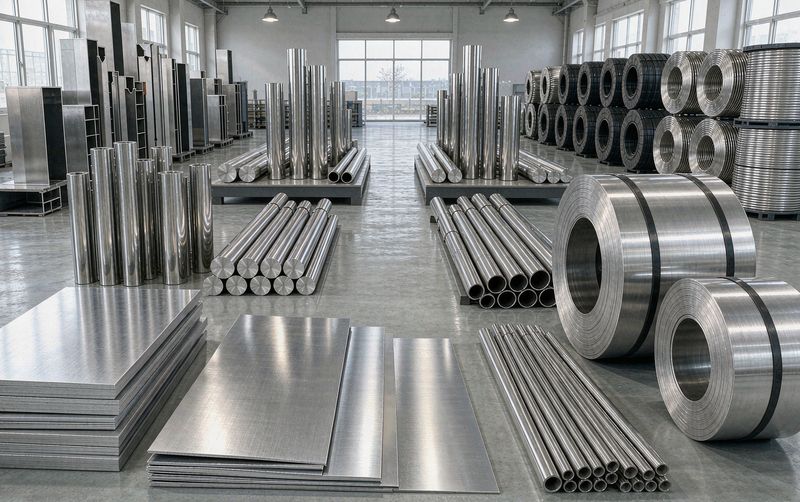
One alloy, six product forms. Each form has its own specification page with full tolerances, processing data and FAQs — click through to the form that matches your application:
| Product Form | Typical Sizes | Common Tempers | Best For | Spec Page |
|---|---|---|---|---|
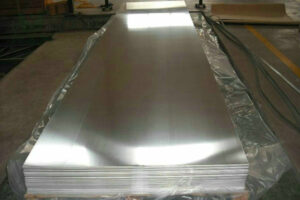
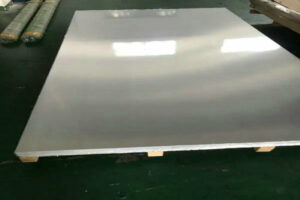
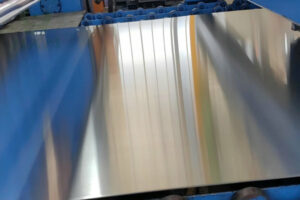
| Sheet & Plate | 0.3–120 mm thick, up to 2,000×6,000 mm | O, H32, H34, H116 | Boat hulls, tanks, panels, cutting stock | 5052 sheets → |
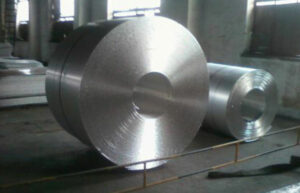
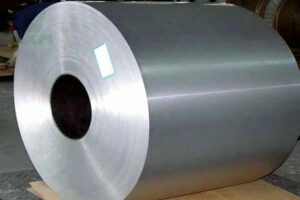
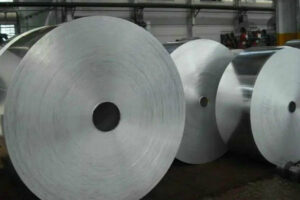
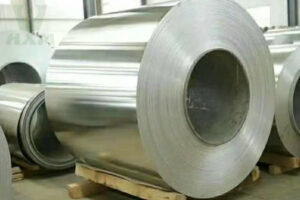
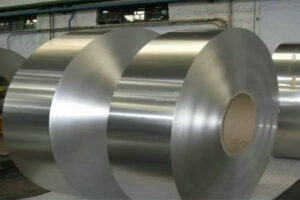
| Coil | 0.15–6.0 mm thick, up to 2,000 mm wide | O, H32, H34, H36 | Roll forming, continuous production, slitting | 5052 coils → |
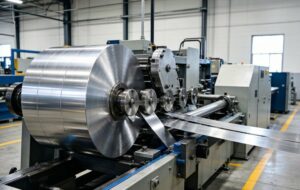
| Strip | 0.15–4.0 mm thick, 12–1,200 mm wide | O, H32, H34, H38, H116 | Cable armor, stamping, transformer, fins | 5052 strips → |
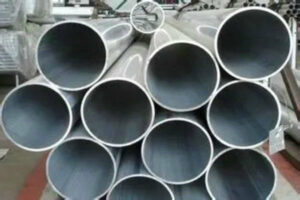
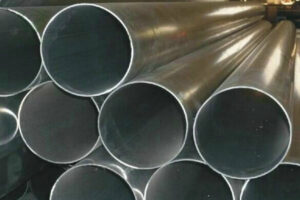
| Tube | Round OD 6–300 mm, square/rectangular | O, H32, H34, H112, H116 | Railings, masts, heat exchangers, frames | 5052 tubes → |
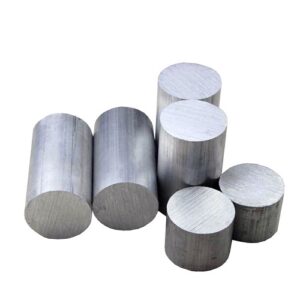
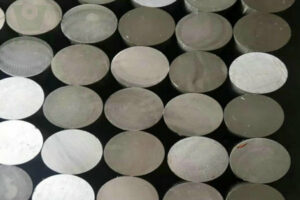
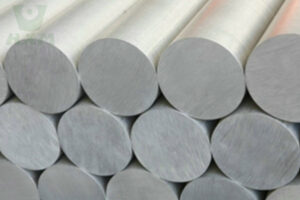
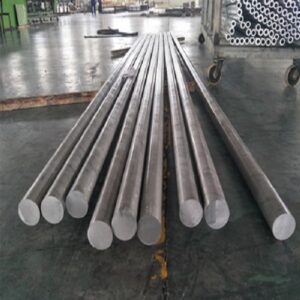
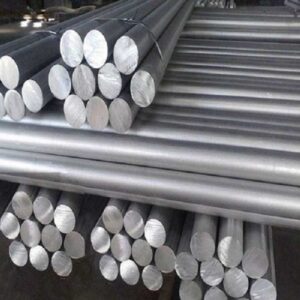
| Bar | Φ6–500 mm round, square, flat, hex | O, H32, H112 | Machined parts, structural solids, fittings | 5052 bars → |
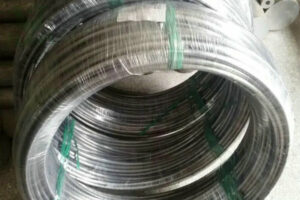
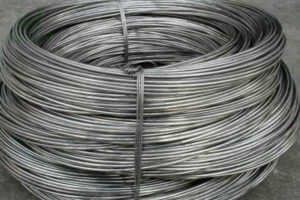
| Wire | Φ1.5–12 mm, coil or spool | O, H32, H38 | Rivets, fasteners, welding consumables | 5052 wires → |
Need more than one form? Mixed-product container orders are welcome — combine sheet + tube + bar in one shipment to optimize freight cost: ask about mixed loading.
Chemical Composition of 5052 Aluminum (Weight %)
| Si | Fe | Cu | Mn | Mg | Cr | Zn | Others each | Al |
|---|---|---|---|---|---|---|---|---|
| ≤ 0.25 | ≤ 0.40 | ≤ 0.10 | ≤ 0.10 | 2.2 – 2.8 | 0.15 – 0.35 | ≤ 0.10 | ≤ 0.05 | Balance |
Registered to AA 5052, EN AW-5052, DIN 3.3523 (AlMg2.5) and GB/T 3190 5052. The combination of magnesium and chromium (0.15–0.35%) is what gives this alloy its superior corrosion resistance and good fatigue properties.
Mechanical Properties — Full Temper Range
Values per ASTM B209 (sheet) / B221 (tube & bar). Guaranteed minimums, longitudinal direction.
| Temper | Tensile (MPa) | Yield (MPa) | Elongation (%) | Hardness (HB) | Primary Use |
|---|---|---|---|---|---|
| O (annealed) | 170 – 230 | ≥ 70 | ≥ 20 | 47 | Deep drawing, severe forming |
| H111 | 170 – 230 | ≥ 95 | ≥ 18 | 52 | Slightly strain-hardened forming |
| H32 | 210 – 248 | 155 – 195 | ≥ 12 | 60 | General structural, marine (balance) |
| H34 | 230 – 262 | 175 – 220 | ≥ 10 | 63 | Stiffer structures, masts, frames |
| H36 | 248 – 276 | 195 – 235 | ≥ 8 | 68 | Higher strength stampings |
| H38 | 262 – 283 | 220 – 248 | ≥ 6 | 70 | Springs, clips, maximum hardness |
| H112 | 170 – 230 | ≥ 110 | ≥ 10 | — | As-extruded tube/bar |
| H116 / H321 | 215 – 285 | ≥ 160 | ≥ 8 | — | Marine structural (verified corrosion resistance) |
Physical Properties of 5052 Alloy
| Density | 2.68 g/cm³ (0.097 lb/in³) |
| Elastic modulus | 70.3 GPa (10.2 × 10&sup6; psi) |
| Melting range | 607 – 649 °C |
| Thermal conductivity | 138 W/m·K (25 °C) |
| Coefficient of thermal expansion | 23.8 µm/m·°C (20–100 °C) |
| Electrical conductivity | 35% IACS (O temper) |
| Electrical resistivity | 4.99 × 10&supmin;&sup6; Ω·cm |
| Modulus of rigidity | 25.9 GPa |
| Poisson’s ratio | 0.33 |
Fabrication Ratings — How 5052 Performs in Your Process
| Fabrication Process | Rating | Guidance |
|---|---|---|
| Welding (TIG / MIG) | Excellent | ER5356 or ER5183 filler; no preheat below 5 mm; see welding guide below |
| Bending / forming | Excellent | O: 1.5×OD min radius · H32: 2.0×OD |
| Deep drawing / stamping | Very Good | O or H32 for complex draws; use water-soluble lubricants |
| Machining | Fair (gummy) | Sharp tools, high rake angle, chip breakers; H32 machines better than O |
| Anodizing | Very Good | Clear or colored anodize; darker shade than 6061 in same bath |
| Riveting / fastening | Excellent | Standard 5xxx rivets; no corrosion issue with steel fasteners if sealed |
Machining notes: 5052 is softer and gummier than 6061-T6. Use PCD or carbide tools with polished flutes and high spindle speeds for a clean finish on bars and tube ends.
Corrosion Resistance — Why 5052 Excels in Marine Environments
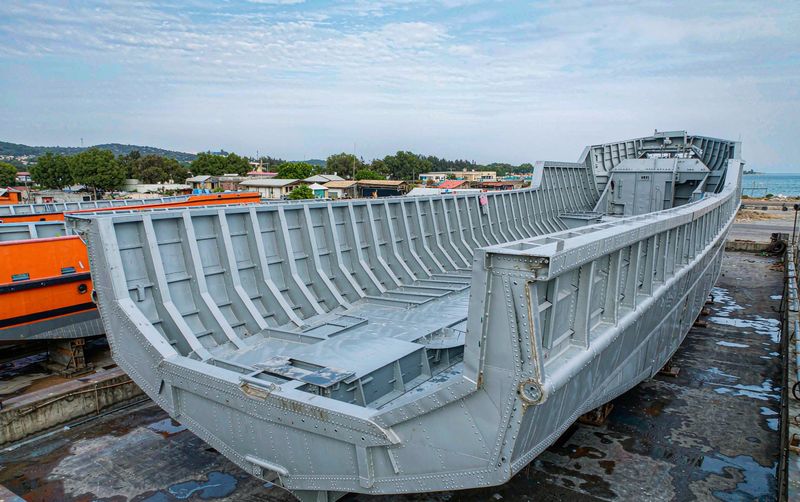
5052 has excellent resistance to saltwater and marine atmospheres — significantly better than 6061 and comparable to the higher-magnesium 5083. In continuous seawater immersion tests, 5052 shows low pitting and no stress-corrosion cracking in normal service. This is why it is specified for boat hulls, fuel tanks, dock structures and coastal architecture.
- H116 / H321 tempers are tested for exfoliation and stress-corrosion resistance — required for many classification-society marine applications.
- For high-temperature exposure above 65 °C in marine service, consult our engineers — 5083 may be required instead.
- Galvanic protection: avoid direct contact with copper/brass fittings; use insulating washers.
- Deep-dive comparison: 5052 vs 5083 for marine applications and our corrosion resistance guide.
5052 vs 5083 vs 6061 vs 3003 — Which Alloy Should You Buy?
| Alloy | Mg Content | Yield (H32/O-T6) | Seawater Resistance | Weldability | Typical Price Index | Best Use |
|---|---|---|---|---|---|---|
| 5052 | 2.2–2.8% | 155–195 MPa | Excellent | Excellent | 1.0 (base) | Marine, tanks, forming, general |
| 5083 | 4.0–4.9% | 215 MPa (O) | Superior | Excellent | 1.15–1.3 | Large hulls, cryogenic, high-strength plate |
| 6061-T6 | 0.8–1.2% | 240–275 MPa | Good (lower) | Good | 0.95–1.05 | Structural frames, machined parts, extrusions |
| 3003 | 0 (Mn alloy) | 115–150 MPa | Moderate | Good | 0.85–0.95 | Cookware, chemical equipment, economical |
Rule of thumb: seawater or forming → 5052 (upgrade to 5083 for very large hulls). Highest strength → 6061-T6. Lowest cost → 3003. For a full side-by-side read 3003 vs 5052 or 5052 vs 5083.
Industries & Applications of 5052 Aluminum
Marine & Shipbuilding
Boat hulls, decks, railings, fuel tanks, masts — the alloy most specified for seawater
Transportation
Trailer bodies, tanker trucks, buses, floor plates, truck side panels
Pressure Vessels & Tanks
Chemical tanks, LPG equipment, cryogenic storage (with 5083 for extreme duty)
Heat Exchangers
Condenser tubing, fin stock, evaporator plates, radiator cores
Electronics & Appliances
Lighting reflectors, appliance panels, battery housings, cable armor
Architecture
Roofing, cladding, coastal façades, handrails, curtain wall components
Quality Assurance & Certification
| Quality system | ISO 9001 certified mill & processing center |
| Mill certificates | EN 10204 3.1 (chemistry + mechanical per heat) on every shipment |
| Third-party inspection | SGS, BV, TÜV or intertek at your cost, before shipment |
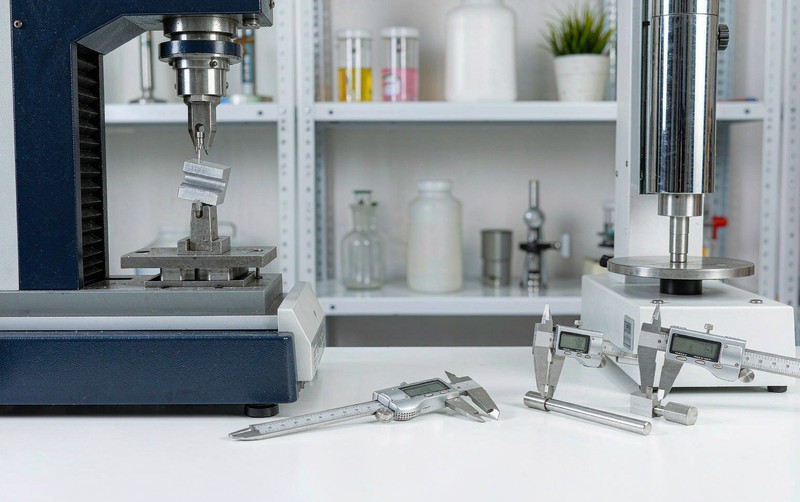
| Testing capability | Tensile, hardness, spectro analysis, salt-spray, bend tests |
| Traceability | Heat number traceable from coil/slab to finished product |
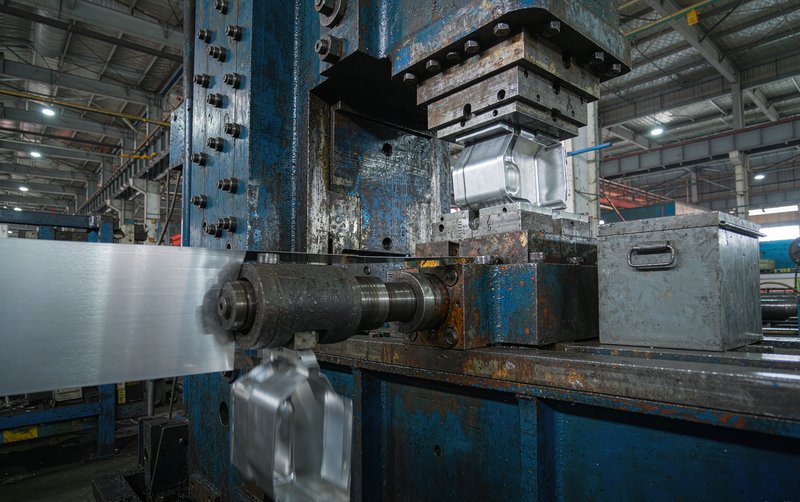
Procurement Guide — Price, MOQ, Delivery
| Pricing basis | FOB, CIF, CFR, DDP, EXW — priced daily against LME + conversion premium |
| MOQ | 1–2 tons per form (sheet/coil/strip/tube/bar); mixed forms in one container OK |
| Sample policy | Small samples (A4 sheet, 1 m tube) available; freight collected |
| Lead time | Stock: 3–7 days · Mill production: 15–20 days |
| Payment | T/T 30% deposit, L/C at sight, D/P for repeat customers |
| Documents | Invoice, packing list, MTC, certificate of origin, fumigation cert |
5052 Aluminum Alloy FAQ
What is 5052 aluminum alloy?
5052 (AA 5052 / EN AW-5052 / AlMg2.5) is a non-heat-treatable aluminum alloy containing 2.2-2.8% magnesium and 0.15-0.35% chromium. It offers an excellent balance of seawater corrosion resistance, weldability, formability and medium-high strength at a density of 2.68 g/cm3. It is the default 5xxx alloy for marine, transportation, tank and heat-exchanger applications.
What is the density of 5052 aluminum?
The density of 5052 aluminum is 2.68 g/cm3 (0.097 lb/in3), slightly lighter than 6061 (2.70) and 5083 (2.66). Use 2.68 for all weight calculations on sheets, coils, strips, tubes and bars.
Is 5052 heat treatable?
No. 5052 is a work-hardening (non-heat-treatable) alloy. Its strength comes from cold working, which is expressed by the H temper designations (H32, H34, H36, H38). If your design needs a heat-treated high-strength alloy, consider 6061-T6 or 6082-T6 instead.
What is the difference between 5052 and 5083?
Both are marine-grade 5xxx alloys. 5083 contains more magnesium (4.0-4.9%) and is stronger (yield ~215 MPa in O temper) and more resistant to stress corrosion, so it is used for large ship hulls and cryogenic tanks. 5052 is easier to form, cheaper, and sufficient for most boats under ~15 m, fuel tanks, railings and panels. See our detailed 5052 vs 5083 comparison for guidance.
Can 5052 be welded? What filler should I use?
Yes, 5052 welds excellently with TIG (GTAW) or MIG (GMAW) using ER5356 or ER5183 filler. No preheat is needed below 5 mm thickness. For marine structural welds, use ER5356 to match corrosion performance. Full technique details are in our aluminum welding guide.
Does 5052 corrode in salt water?
5052 has excellent resistance to seawater and marine atmospheres – significantly better than 6061 and adequate for most marine structures. For the highest guarantee, specify H116/H321 tempers, which are tested for exfoliation and stress-corrosion resistance. Avoid direct contact with copper/brass fittings to prevent galvanic corrosion.
What tempers are available for 5052?
We supply O (annealed), H111, H32, H34, H36, H38, H112 and H116/H321 marine tempers. The most common are H32 (general structural), H34 (stiffer structures), O (deep forming) and H116 (marine). Tell us your application and we will recommend the optimum temper.
What product forms can I buy 5052 in?
All six forms: sheet & plate, coil, strip, tube (round/square/rectangular), bar (round/square/flat/hex) and wire. Each form has its own page with full specifications, tolerances and FAQs – use the product matrix on this page to jump to the right one.
Is 5052 good for stamping and deep drawing?
Yes. 5052-O has elongation of at least 20% and is excellent for deep drawing, stamping and severe forming. For lighter draws, H32 gives a good compromise between formability and part strength. Use water-soluble lubricants and account for springback of 2-5 degrees in H tempers.
Can 5052 be anodized?
Yes, 5052 anodizes very well, producing a clear or dyed anodic film with good hardness. Note that in the same anodizing bath, 5052 develops a slightly darker shade than 6061 because of its magnesium content. See our anodizing guide for process details.
What are the MOQ and lead time?
MOQ is 1-2 tons per form depending on the product (sheet/coil: 2 tons; tube/bar: 1 ton). Mixed forms in one container are welcome. Stock sizes ship in 3-7 days; mill production takes 15-20 days. Samples are available with freight collected.
How do you price 5052 aluminum?
We price daily against the LME aluminum price plus a conversion premium that depends on form, gauge, width, temper and surface quality. Send us your spec (alloy, form, sizes, temper, quantity, destination port) and we return an FOB or CIF quote within 24 hours.
Explore the Full 5052 Product Family
Tell us your alloy, form and sizes — get an FOB/CIF quote within 24 hours.