Aluminum Tube & Pipe Supplier — 5083 / 6061 / 5052 / 5086 | Round, Square, Rectangular | OD 6–500 mm | ASTM B241 / B210 / EN 755 | EN 10204 3.1 Cert | MOQ 500 kg | Quote in 24h
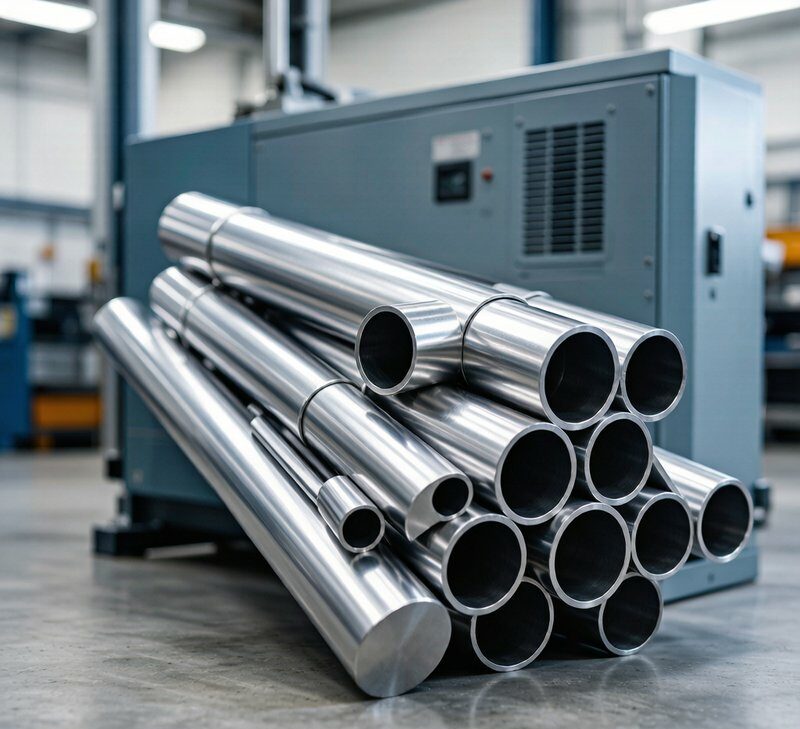
5083 vs 6061 Aluminum Tube & Pipe: Which Alloy Should You Choose?
Choosing between 5083 and 6061 aluminum tube is one of the most common decisions buyers face — and getting it wrong is expensive. Pick 6061 for a saltwater piping system and you will fight pitting corrosion within months. Pick 5083 for a precision-machined structural frame and you will pay more per kilogram and spend more on machining.
This guide compares the two alloys exactly the way our engineers do when quoting: chemical composition, mechanical properties, corrosion behavior, weldability, machinability, cost and real-world applications. By the end you will know precisely which alloy fits your project. Need help deciding now? Send us your application or message us on WhatsApp for a free alloy selection review.
The Quick Answer: 5083 vs 6061 at a Glance
| Factor | 5083 Tube | 6061 Tube |
|---|---|---|
| Family | Al-Mg (5xxx), non-heat-treatable | Al-Mg-Si (6xxx), heat-treatable |
| Best known for | Marine & saltwater service | Structural & machined parts |
| Typical tempers | O, H111, H112, H116, H321 | T4, T6, T651 |
| Tensile strength (typ.) | 275–350 MPa | 290–310 MPa (T6) |
| Yield strength (typ.) | 125–270 MPa | 240–270 MPa (T6) |
| Saltwater corrosion | Excellent — marine grade | Moderate — needs coating |
| As-welded strength | Retains most base strength | Loses 30–40% in HAZ |
| Machinability | Fair (gummy, work-hardens) | Excellent (small chips) |
| Anodizing finish | Good, slightly yellow tone | Excellent, clear & cosmetic |
| Relative price | Higher (+5–15%) | Lower, most stocked |
| Choose it when | Welded + saltwater/immersion | Machined + dry/indoor/coated |
One-line summary: if the tube will be welded and exposed to seawater or corrosive media, specify 5083. If it will be machined, mechanically joined, or used in dry structural service, specify 6061-T6. Everything below explains why — with the data behind each row.
Chemical Composition: Where the Difference Starts
| Element | 5083 (%) | 6061 (%) |
|---|---|---|
| Mg | 4.0 – 4.9 | 0.8 – 1.2 |
| Si | ≤ 0.40 | 0.40 – 0.80 |
| Mn | 0.40 – 1.00 | ≤ 0.15 |
| Cu | ≤ 0.10 | 0.15 – 0.40 |
| Cr | 0.05 – 0.25 | 0.04 – 0.35 |
| Zn | ≤ 0.25 | ≤ 0.25 |
| Fe | ≤ 0.40 | ≤ 0.70 |
| Ti | ≤ 0.15 | ≤ 0.15 |
Two elements drive everything:
1. Magnesium (4–4.9% in 5083). High magnesium creates a robust, self-repairing passive film that gives 5083 its outstanding seawater resistance. It also provides solid-solution strengthening that does not depend on heat treatment — so welds stay strong.
2. Copper (up to 0.40% in 6061). Copper boosts the strength response of 6061 during T6 heat treatment, but copper-rich intermetallics are cathodic to the aluminum matrix. In chloride environments they become pitting initiation sites — the fundamental reason 6061 is not a marine alloy. Combined with magnesium-silicide (Mg₂Si) precipitates, this gives 6061 its heat-treatable strength, but at the cost of corrosion resistance and weld crack sensitivity.
Mechanical Properties by Temper
| Alloy / Temper | Tensile (MPa) | Yield (MPa) | Elongation % | Typical Use |
|---|---|---|---|---|
| 5083-O | 275 – 350 | 115 – 200 | 16 – 24 | Bending, coiling, forming |
| 5083-H112 | 275 – 350 | 125 – 230 | 12 – 20 | General welded structures |
| 5083-H116 | 305 – 385 | 215 – 290 | 10 – 16 | Marine pipe, immersed service |
| 5083-H321 | 305 – 385 | 220 – 295 | 10 – 16 | High-pressure marine tube |
| 6061-T4 | ≥ 210 | ≥ 110 | ≥ 14 | Formable then aged |
| 6061-T6 | 290 – 310 | 240 – 270 | 8 – 12 | Structural, machined parts |
| 6061-T651 | ≥ 310 | ≥ 275 | 8 – 10 | Precision tubes, stress critical |
Reading the table correctly matters. On paper 6061-T6 has the highest yield. But three practical points flip the picture for many projects:
• Welded assemblies: TIG/MIG welding dissolves the Mg₂Si hardening precipitates in 6061’s heat-affected zone, dropping local strength 30–40% (to roughly 165 MPa as-welded). 5083 loses almost nothing — its strength never depended on heat treatment. A welded 5083-H321 tube joint commonly outperforms a welded 6061-T6 joint of the same size.
• Low temperature: 5083 retains and even slightly improves toughness at cryogenic temperatures (−196 °C), making it the standard for LNG and refrigerant lines. 6061 is acceptable but less documented for these services.
• Ductility: 5083-O and H111 elongate 16–24% — roughly double 6061-T6 — which matters for bending, flaring and cold forming tube.
Corrosion Resistance: The Deciding Factor for Marine & Outdoor
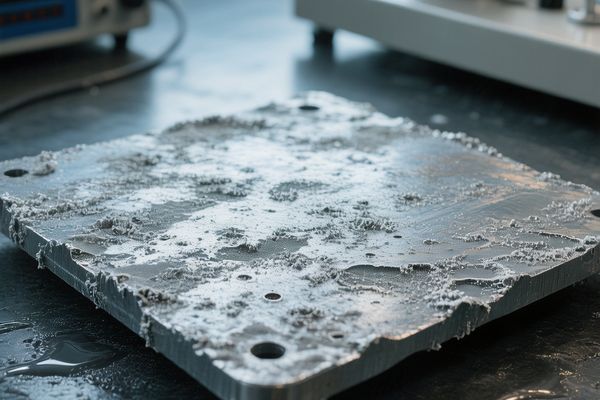
In ASTM G85 salt spray and seawater immersion testing, the two alloys behave very differently:
5083 shows uniform, low-rate general corrosion. Its magnesium-rich oxide film is self-healing — scratches re-passivate in air and seawater. Tempers H116 and H321 are additionally qualified against exfoliation and intergranular corrosion per marine classification standards (DNV, ABS, Lloyd’s Register), which is why 5083 is the default alloy for hull structures, seawater piping and offshore components. Typical corrosion rate in flowing seawater: < 0.02 mm/year.
6061 performs well in rural and urban atmospheres and is widely used for outdoor structural tube with powder coating or anodizing. But in continuous chloride exposure, copper-containing intermetallics drive pitting corrosion — pits can propagate through a 3 mm wall in a few years if left uncoated and electrically coupled to more noble metals. 6061 also has no exfoliation-qualified temper, so marine class societies do not approve it for immersed structural use.
For a deeper treatment of this topic, see our aluminum corrosion resistance guide and the 5083 marine grade aluminum guide.
Weldability: 5083 Wins for Fabricated Structures
| Aspect | 5083 Tube | 6061 Tube |
|---|---|---|
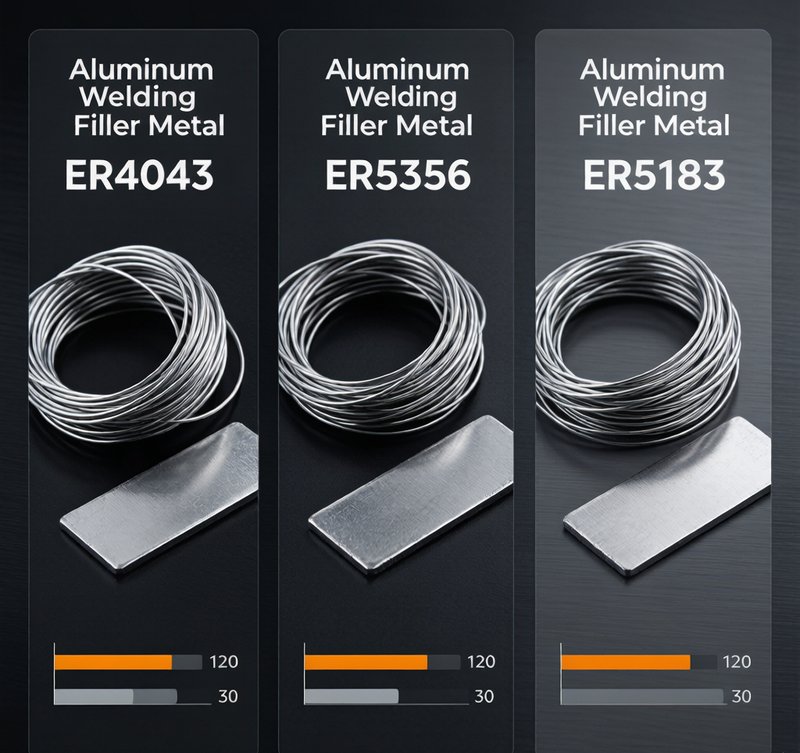
| Hot-crack sensitivity | Low | High (needs 4xxx filler) |
| Recommended filler | ER5356 / ER5183 | ER4043 / ER4047 (or 5356) |
| As-welded joint strength | ~90% of base metal | ~60–70% of base metal |
| Post-weld heat treatment | Not possible / not needed | Re-aging possible but costly |
| Welded marine approval | Standard practice | Rarely approved |
Practical guidance from our fabrication floor:
• 5083 tube welds reliably with pure argon shielding at 150–250 A (TIG) or synergic MIG programs. Joint strength typically reaches 275+ MPa with ER5356, and no heat treatment is required after welding. This is why shipyards fabricate 5083 rails, piping and structural frames directly.
• 6061 tube welds successfully too — but only with the right filler. Using 6061 as its own filler guarantees hot cracking. ER4043 (Al-5Si) cracks less and flows well; ER5356 is chosen when the weld will be anodized or needs higher joint strength. Expect the HAZ to soften, and design so that welded joints are not the peak-stress locations, or specify thicker walls.
Full process parameters, filler charts and defect-avoidance tips are in our aluminum welding guide.
Machining & Forming: Where 6061 Is the Better Tool
Machining — 6061-T6 is the benchmark. It chips cleanly, holds ±0.02 mm tolerances, and takes excellent cosmetic anodizing. Typical uses: fittings, manifolds, hydraulic adapters, camera and robotics frames. 5083 is machinable but gummier — chips are stringy, tools wear faster, and long 7xxx-series-style speeds will cause built-up edge. Machine 5083 in H112/H321 temper, use sharp uncoated or ZrN carbide tooling, high lubrication, and climb milling.
Bending and forming — 5083-O/H111 wins. With 16–24% elongation, 5083-O tube bends to tight radii (≈1.5–2× OD) without cracking, and H111 still forms comfortably. 6061-T6 is stiff and crack-prone in tight bends; if you must bend it, buy T4 and age to T6 after forming, or use a large radius (≥3× OD) with mandrel support.
For bending-process detail (die setup, mandrel types, springback), see the aluminum tube & pipe complete guide.
Cost, Weight & Availability
Weight is identical. Both alloys have a density of 2.70 g/cm³ (5083 is 2.66–2.70 depending on composition), so for the same tube dimensions there is no weight penalty for choosing the corrosion-resistant option.
Price: 6061 tube typically runs 5–15% cheaper per kg due to enormous global extrusion volume. 5083 commands a premium for its higher magnesium content and marine certification. However, total project cost often reverses this: 6061 in corrosive service needs coating systems (anodizing or epoxy), re-coating cycles and earlier replacement — while 5083 runs bare for the life of the asset.
Availability at HXM Aluminum: both alloys are stocked in round, square and rectangular tube. 6061-T6 is available in the widest size range (OD 6–500 mm, wall 0.5–50 mm); 5083 marine sizes (H116/H321) are stocked in the most common OD/wall combinations with EN 10204 3.1 certificates. MOQ is 500 kg per size, stock items ship in 3–5 days, production in 7–25 days.
Which Alloy for Which Application?
| Application | Recommended Alloy/Temper | Why |
|---|---|---|
| Boat seawater cooling / bilge piping | 5083-H116 / H321 | Continuous immersion; marine class approved |
| Fuel & water tanks piping on vessels | 5083-H321 | Weld strength + corrosion + certification |
| Handrails, gangways, splash-zone structure | 5083-H112 / H116 | Salt spray exposure, welded fabrication |
| Cryogenic / refrigerant lines (LNG) | 5083-O / H112 | Toughness retained at −196 °C |
| Structural frames, racks, trusses (dry) | 6061-T6 | Highest yield, cheap, weldable with 4043 |
| CNC-machined fittings & manifolds | 6061-T651 | Best machinability + cosmetic anodize |
| Trailer / truck tube frameworks | 6061-T6 | Strength-to-weight, cost, indoor-ish service |
| Irrigation, HVAC, pneumatic lines | 6061-T6 | Dry media, standard extrusions |
| Heat exchanger / condenser tubing | 5083-O or 6061-T4 | Formability for finning & coiling |
| Offshore platform walkways & conduit | 5083-H116 | Exfoliation-qualified marine temper |
Four Questions That Decide It
Ask these in order — the first ‘yes’ usually settles the choice:
1. Will the tube be wetted by seawater or corrosive media? Yes → 5083 (H116/H321 if classification-certified). No → continue.
2. Is the assembly primarily welded? Yes, and loads are meaningful → 5083 (or 5086). No, mostly bolted/screwed → continue.
3. Does the part need heavy CNC machining or cosmetic anodizing? Yes → 6061-T6/T651. No → continue.
4. Is the lowest purchase price the priority for a dry, protected environment? Yes → 6061-T6. If none of the above apply and both work, cost and lead time break the tie — and 6061 usually wins both.
Borderline cases worth mentioning: hydraulic cylinder tubing works in 6061-T6 for low-pressure circuits but 5083-H321 or a 7xxx alloy for high pressure; bus and conduit tube is almost always 6061; anything touching the sea on a classed vessel is almost always 5083. Our engineers routinely review drawings and flag the correct alloy per component — send us your BOM for a free check.
Both Alloys, One Supplier
HXM Aluminum manufactures and stocks both alloys, so you can match alloy to application per line item instead of compromising:
• 5083 aluminum tubes — marine-grade round/square/rect tube, O to H321, EN 10204 3.1 cert, class-society standards.
• 6061 aluminum tubes — T4/T6/T651 structural and precision tube, OD 6–500 mm, cut-to-length.
Also available: 5052 tubes for general corrosion duty, 5086 tubes for economical marine forming, and 7005 tubes for high-strength welded frames.
Typical commercial terms: MOQ 500 kg per size (mixed sizes negotiable), stock delivery 3–5 days, production 7–25 days, export packaging with end caps and seaworthy bundles, quotes within 24 hours.
Frequently Asked Questions: 5083 vs 6061 Aluminum Tube
Which is better for saltwater: 5083 or 6061 aluminum tube?
5083 is the clear choice for saltwater. Its 4.0–4.9% magnesium content forms a self-healing oxide film that resists pitting and intergranular corrosion, and tempers H116/H321 are specifically qualified for marine service. 6061-T6 contains copper (0.15–0.40%), which makes it significantly more susceptible to galvanic and pitting corrosion in seawater — it is acceptable only for splash-zone or intermittently wetted parts with protective coating.
Is 6061-T6 aluminum tube stronger than 5083 tube?
Yes, in the base temper. 6061-T6 tube has a typical tensile strength of about 290–310 MPa and yield of 240–270 MPa, versus roughly 275–350 MPa tensile and 125–270 MPa yield for 5083 depending on temper. However, after welding, 6061-T6 loses roughly 30–40% of its strength in the heat-affected zone, while 5083 retains most of its as-welded strength — so welded 5083 structures often outperform welded 6061 in service.
Can 5083 aluminum tube replace 6061 tube in structural frames?
Often yes, and sometimes it is the better engineering choice. If the frame is welded, load-bearing and exposed to weather or salt spray, 5083 provides better as-welded strength and corrosion performance. If the frame is mechanically joined, indoor, and requires tight machining tolerances or anodized cosmetic finish, 6061-T6 remains more economical and easier to machine.
What welding filler should I use for 5083 tube versus 6061 tube?
For 5083 tube use ER5356 or ER5183 filler. For 6061 tube use ER4043 or ER4047 — 5356 is also acceptable when the joint is subsequently anodized or needs higher as-welded strength. Never use a 1xxx or 4xxx filler on 5083 for load-bearing marine joints, because magnesium dilution can reduce joint strength and corrosion performance.
Why does 6061 tube crack during welding while 5083 does not?
6061 is heat-treatable and prone to hot cracking (solidification cracking) during welding because of its magnesium-silicide composition, especially with poor filler selection or high restraint. 5083 is a non-heat-treatable Al-Mg alloy with a wide solidification range and much better weldability. Choosing ER4043/ER4047 filler and proper joint design largely eliminates cracking in 6061.
Which alloy is cheaper: 5083 or 6061 aluminum tube?
6061 tube is generally 5–15% cheaper per kilogram because it is produced in far larger volumes and simpler extrusion conditions. But the true comparison is lifecycle cost: in marine or corrosive service, 6061 needs coatings, more maintenance and earlier replacement, which typically makes 5083 cheaper over the life of the asset. Ask us for a same-size quote in both alloys to compare for your project.
Is 5083 aluminum tube heat treatable?
No. 5083 is a non-heat-treatable alloy — its strength comes from magnesium solid-solution strengthening and strain hardening (tempers O through H321). 6061 is heat-treatable to T4/T6/T651. This is why 5083 cannot be re-strengthened after welding by heat treatment, but it also means it does not lose its base properties in a weld heat-affected zone the way 6061 does.
What tempers of 5083 and 6061 tube do you supply?
5083 tube: O, H111, H112, H116 and H321. 6061 tube: T4, T6 and T651 (stress-relieved). Marine classification applications normally require 5083 H116 or H321 with EN 10204 3.1 certification; structural and machining applications normally use 6061-T6.
Which alloy machines better: 5083 or 6061?
6061-T6 machines significantly better. It produces small, breakable chips, holds tight tolerances and takes a clean finish, which is why it dominates CNC-machined fittings, manifolds and brackets. 5083 is gummier and work-hardens, requiring sharper tooling, moderate speeds and good lubrication — we recommend machining 5083 in H112 or H321 temper for best results.
Can I use 5083 and 6061 tube in the same assembly?
Yes, with precautions. Mechanically joined mixed-alloy assemblies are common and trouble-free. For welded mixed-alloy joints use ER5356 filler, which works across both alloys. The main caution is galvanic corrosion: in continuous saltwater immersion the less noble alloy can corrode preferentially — isolate dissimilar joints with sealant or isolation washers in marine environments.
What is the difference between 5083 and 5086 tube for marine piping?
Both are marine Al-Mg alloys. 5083 offers higher strength (about 10–15% higher tensile and yield) and is preferred for high-pressure and structural marine tube. 5086 offers slightly better formability and ductility and is often more economical for lower-pressure, heavily-formed applications. See our dedicated 5086 tube page for details.
How do I get a quote for 5083 or 6061 aluminum tube?
Send us the alloy preference (or your application description), OD, wall thickness, temper, length, quantity and destination port. Our engineers will confirm the optimal alloy/temper combination and reply with pricing, MOQ and lead time within 24 hours by email or WhatsApp.
Related Guides & Product Pages
• Aluminum Tube Wall Thickness & Pressure Rating Guide — how to size walls for working pressure.
• Aluminum Tube for Marine Piping Systems — seawater, fuel, exhaust and hydraulic line selection.
• Aluminum Tube & Pipe: Complete Guide — sizes, tolerances, tempers and applications.
• 6082 vs 6061 Aluminum Comparison — the structural-side sibling comparison.
• 5083 Marine Grade Aluminum Guide — full marine alloy overview.
• Aluminum Welding Guide — filler selection for both alloys.
• Aluminum Corrosion Resistance Guide — pitting, galvanic and exfoliation explained.
Still Deciding? Get a Free Alloy Review
Send your application, sizes and environment — our engineers will recommend the right alloy and temper, quote both options, and confirm MOQ and lead time within 24 hours.