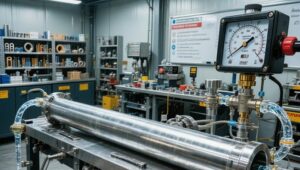
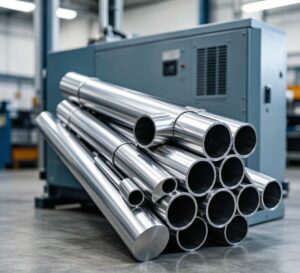
Marine Aluminum Tube Supplier — 5083 H116/H321 / 5086 | Seawater, Fuel, Exhaust & Hydraulic Lines | OD 10–300 mm | ASTM B241 / EN 755 | EN 10204 3.1 + Class Society Certs | MOQ 500 kg | Quote in 24h
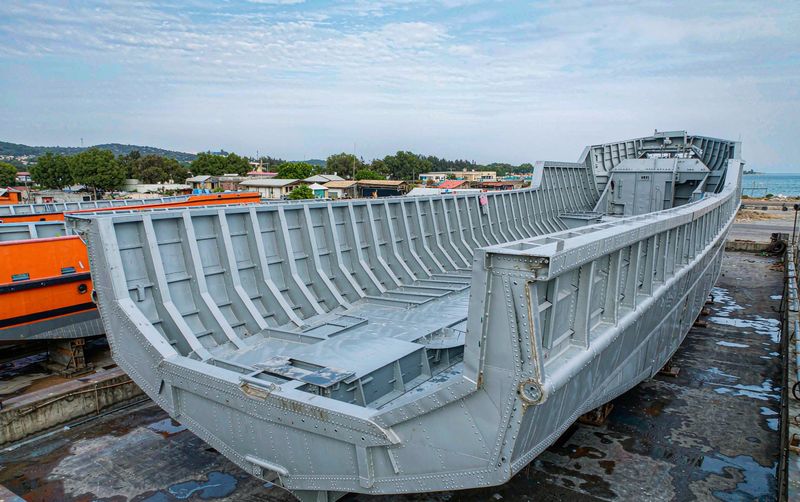
Aluminum Tube for Marine Piping Systems: Seawater, Fuel, Exhaust & Hydraulic Lines
Every vessel — from a 9 m fishing boat to a 90 m workboat — is a network of piping systems, and every meter of that piping is a decision: material, alloy, wall thickness, joining method. Corroded steel lines, biofouled cupro-nickel and cracked welded joints are among the most common causes of unplanned drydocking.
This guide explains where marine aluminum tube is the right answer, system by system: seawater cooling, fuel, exhaust and hydraulics — with the alloy/temper, typical sizes and the engineering rules our team applies when quoting shipyards and boatbuilders. Building or refitting? Send us your line list for a material review and quote within 24 hours.
Why Shipyards Choose Aluminum Piping
| Factor | 5083 Aluminum | Carbon Steel | Cupro-Nickel 90/10 |
|---|---|---|---|
| Density (g/cm³) | 2.70 | 7.85 | 8.9 |
| Line weight (same size) | 1.0× (reference) | 2.9× | 3.3× |
| Rust / staining | None | Severe without coating | None |
| Seawater corrosion rate | < 0.02 mm/yr | 0.1–0.5 mm/yr bare | < 0.02 mm/yr |
| Cost per meter (typ.) | Medium | Low | High |
| Welding | Standard TIG/MIG | Standard | Specialist (CuNi) |
| Biofouling resistance | Moderate | Poor (rust pockets) | Excellent |
| Max practical velocity | ~2.4 m/s | 3 m/s (coated) | 3 m/s+ |
The headline advantage is weight: an aluminum seawater line weighs roughly one-third of the steel equivalent. On a workboat with 100+ meters of piping, that saves hundreds of kilograms high in the vessel — better stability, more payload, lower fuel burn. Add no-rust appearance, easy field welding with standard aluminum equipment, and full recyclability, and aluminum becomes the default for modern lightweight vessels.
The honest limits: aluminum prefers moderate flow velocities (≤ 2.4 m/s in continuous seawater service to protect the passive film from erosion), and it needs correct isolation from dissimilar metals. Where those rules are respected, 5083 piping routinely serves 20+ years with minimal maintenance.
System 1: Seawater Cooling & Bilge Lines
| Parameter | Typical Specification |
|---|---|
| Medium | Raw seawater, 0–35 °C, continuous flow |
| Recommended alloy / temper | 5083-H112 (structure) / 5083-H116 (immersed) |
| Typical OD range | 25 – 250 mm |
| Typical wall | 2 mm (OD ≤ 76) · 3 mm (76–159) · 4–5 mm (>159) |
| Design velocity | ≤ 2.4 m/s (erosion limit of passive film) |
| Working pressure (typ.) | 3 – 6 bar (cooling), 8–10 bar (fire main) |
| Joining | TIG/MIG butt weld; flanged connections to equipment |
| Corrosion allowance | 0.3–0.5 mm per side for 20–25 yr life |
| Standards | ASTM B241 / EN 755, EN 10204 3.1 |
Seawater cooling is the highest-volume aluminum piping application. Design keys: keep velocities below 2.4 m/s (including pump-start transients), avoid dead legs where sediment accumulates, and fit sacrificial anodes or an impressed-current system sized for the mixed-metal circuit. For bilge suction lines, the same rules apply with the addition of strainer isolation to prevent debris erosion.
Fire mains run at higher pressure (8–10 bar) — verify wall thickness against the pressure tables in our wall thickness & pressure rating guide and hydrotest at 1.5× working pressure.
System 2: Fuel Transfer & Tank Piping
| Parameter | Typical Specification |
|---|---|
| Medium | MGO / diesel, 0–60 °C, intermittent flow |
| Recommended alloy / temper | 5083-H112 / H321 (piping), 5083-O (hose forms) |
| Typical OD range | 16 – 114 mm |
| Typical wall | 1.5 – 3 mm |
| Design velocity | ≤ 4 m/s (non-corrosive medium) |
| Working pressure (typ.) | 2 – 6 bar transfer; 10+ bar bowser/transfer pumps |
| Joining | TIG butt weld + flanged to pumps/valves |
| Special care | Bonding/earthing against static; drip trays at joints |
Diesel is non-corrosive to aluminum, so the alloy choice here is driven by welded strength, weight and class approval rather than corrosion — which is why 5083 dominates. Two engineering notes: first, all fuel piping must be electrically bonded to the hull earthing system to prevent static build-up during transfer; second, avoid bare aluminum-to-bronze valve bodies in wet bilges — isolate the flanges. Fuel lines also benefit from 5083’s excellent low-temperature toughness for deck exposed runs in cold climates.
Many builders order fuel-line tube together with tank shell from our 5083 coil and 5083 bar ranges so the whole fuel system shares one certified heat lot.
System 3: Wet Exhaust & Ventilation Lines
Wet exhaust (water-injected) is the only exhaust duty aluminum should take. After the waterlock and injection point, gas temperatures drop below 70 °C and the mixture is hot saltwater-laden vapor — an aggressive environment where 5083-H112 tube excels while steel rots in a few seasons. Typical specification: OD 60–300 mm, wall 2–4 mm, TIG welded, with short support spans (aluminum modulus is one-third of steel) and rubber bellows for vibration isolation. Keep the run sloped to drain and avoid low pockets where saltwater pools.
Dry exhaust sections (400–600 °C) are not aluminum territory — strength collapses above ~200 °C. Use stainless or aluminized steel there, and transition to aluminum only downstream of the water injection.
Natural ventilation and air-intake trunking (non-pressurized, salt-laden air) is an easy aluminum win too: 5083 or even 6061-T6 square/rect tube frames with sheet cladding, completely corrosion-free for the life of the vessel.
System 4: Hydraulic & Instrument Lines
| Duty | Recommended Tube | Typical OD × Wall | Notes |
|---|---|---|---|
| Low-pressure return / drain | 5083-H112 or 6061-T6 (coated) | 12 – 25 mm × 1.5 – 2 mm | Dry compartments; isolate fittings |
| Medium-pressure supply (≤ 160 bar) | 5083-H321 | 16 – 42 mm × 2 – 5 mm | Verify with pressure tables; 1.5× hydrotest |
| High-pressure circuits (> 250 bar) | 5083-H321 thick-wall or honed cylinder tube | 40 – 160 mm × 5 – 20 mm | Honed bore H8 on request |
| Instrument / compressed air | 6061-T6 | 6 – 12 mm × 1 mm | Dry air only; anodized preferred |
Hydraulics divide by pressure. Low-pressure return and drain lines tolerate 6061-T6 if they run in dry spaces and fittings are isolated. Supply circuits at deck level or in machinery spaces near seawater should be 5083-H321, sized with the hoop-stress tables and tested hydrostatically at 1.5× working pressure before commissioning. Above roughly 250 bar, wall thickness becomes dominant — our team checks the calculation and, for cylinder duty, supplies honed 5083 tube with H8 bore tolerance.
For the full sizing method (Barlow formula, safety factors, corrosion allowance), read our wall thickness & pressure rating guide.
5083 vs 5086 vs 6061 for Marine Piping
The three candidate alloys rank like this for piping service:
5083 (H112/H116/H321) — the workhorse. Highest strength of the three, marine tempers qualified against exfoliation and intergranular attack, excellent weldability with ER5356. Default for pressurized lines, fire mains, fuel piping and anything class-surveyed.
5086 (H112/H116) — the formable twin. 10–15% lower strength but slightly better ductility and often better price. Excellent for larger-diameter, thinner-wall lines and heavily fabricated runs where bending dominates over pressure.
6061-T6 — the specialist. Best machinability for fittings and manifolds, highest base yield — but copper content rules it out of continuous seawater service. Use for dry-compartment hydraulics, coated lines and machined components; pair with 5083 tube for the wetted runs.
Full data tables and the four-question decision method are in our 5083 vs 6061 tube comparison; 5052 remains an option for low-pressure, highly formed lines — see 5052 tube.
Welding & Joining Practice Onboard
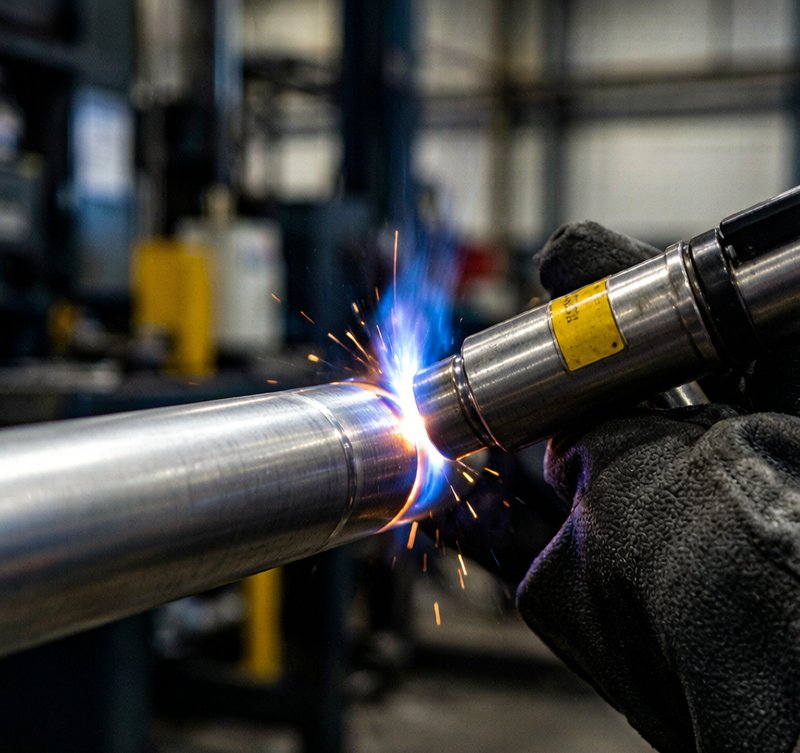
Process selection: TIG (GTAW) for OD ≤ 60 mm and wall ≤ 3 mm — best root quality on thin marine walls. MIG (GMAW) for larger diameters and production runs. Both use pure argon; back-purge thin-wall lines (< 3 mm) to prevent root oxidation (sugaring).
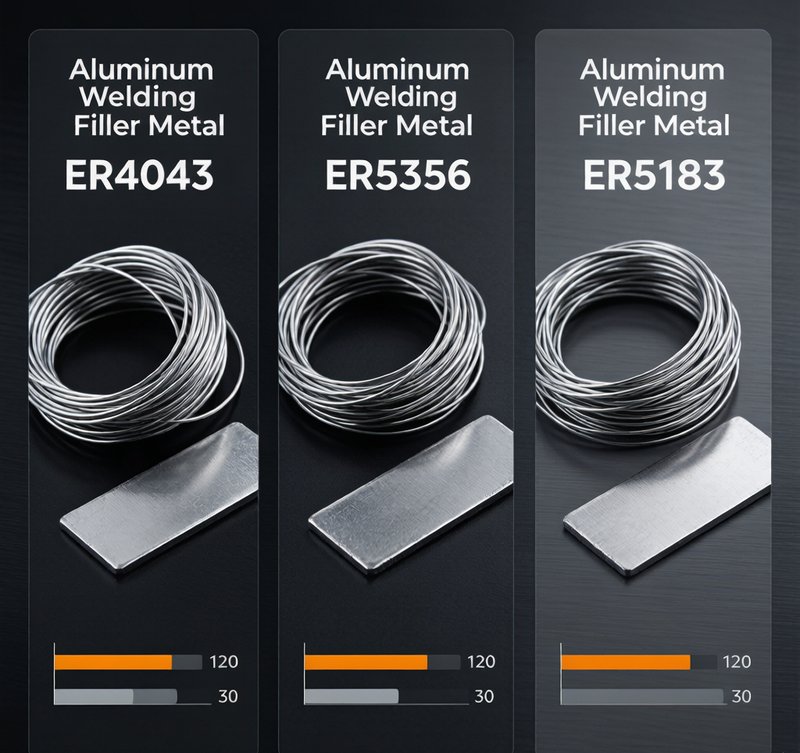
Filler selection: ER5356 is the universal marine filler for 5083/5086 piping; ER5183 where maximum as-welded strength is needed. Never use 4043-type filler on load-bearing marine joints that will be anodized or class-surveyed — magnesium dilution reduces both strength and corrosion performance. Full charts in our aluminum welding guide.
Preparation discipline: oxide removal within 30 minutes of welding, stainless brushes dedicated to aluminum, solvent wipe, and dry storage of filler rods. Most at-sea weld failures trace back to oxide contamination, not alloy choice.
Mechanical joints: flanged connections at pumps, valves and hull penetrations; insulating kits wherever aluminum meets bronze/steel; torque bolts evenly to avoid flange warping on thin walls.
Corrosion Protection, Testing & Certification
Design-stage protection: velocity limits (≤ 2.4 m/s seawater), no dead legs, drainage slopes, and galvanic isolation at every dissimilar joint. Then a cathodic protection plan — sacrificial anodes or impressed current — sized for the mixed-metal circuit so aluminum is protected without over-protection (alkali attack above pH 9).
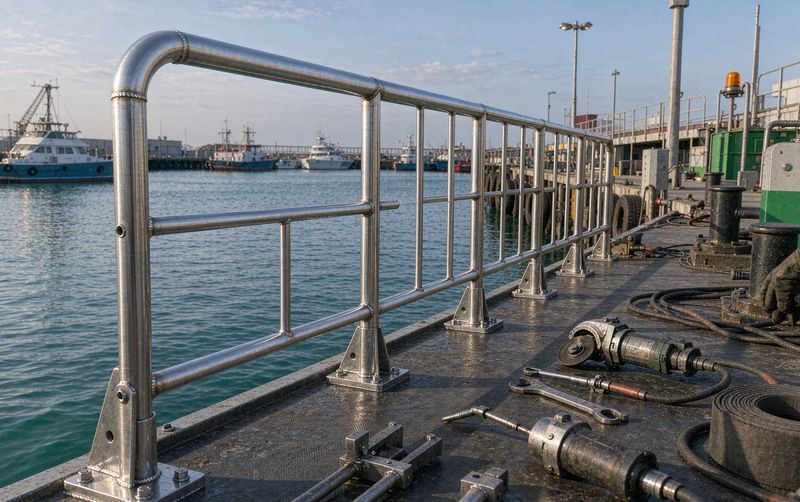
Coatings: bare 5083 is acceptable for most seawater duty; epoxy systems are specified where sediment contact or extreme velocities occur, and anodizing suits external splash-zone railings and visible runs.
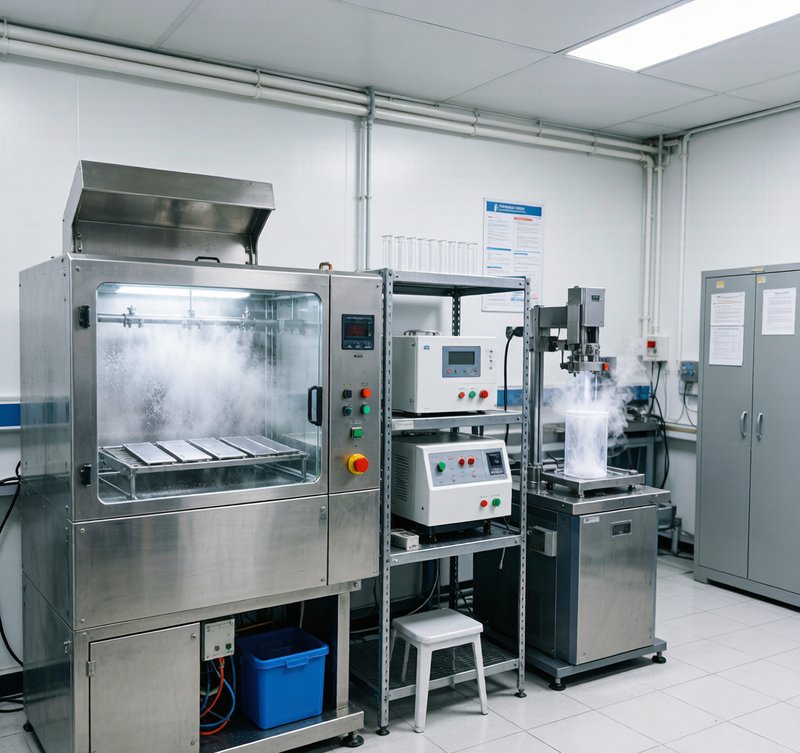
Testing & certification we provide: every lot ships with EN 10204 3.1 mill certificates (chemistry + mechanicals). On request: hydrostatic or pneumatic test at 1.5× working pressure, dye-penetrant on welds, ultrasonic wall-thickness scan, and third-party inspection (SGS / TUV / BV) witnessed before packing. Class-society material acceptance (DNV, ABS, LR, BV, RINA) is routine for 5083 H116/H321.
Compare alloy corrosion data in detail in the aluminum corrosion resistance guide and 5083 marine grade guide; for hull plate and sheet (rather than piping), see the 5052 vs 5083 marine sheet buyer guide.
Stock Range & How to Order
| Item | Specification |
|---|---|
| Alloys / tempers | 5083 O, H111, H112, H116, H321 · 5086 H112/H116 · 6061 T6 |
| Product forms | Round tube (seamless & extruded), square, rectangular |
| OD range | 10 – 300 mm (custom extrusion to 500 mm) |
| Wall range | 1 – 20 mm |
| Lengths | 1000 – 6000 mm standard; cut-to-length, chamfered ends |
| Certificates | EN 10204 3.1; DNV/ABS/LR/BV acceptance; SGS/TUV on request |
| Packaging | End caps, bundled, seaworthy export packing |
| MOQ | 500 kg per size (mixed sizes negotiable) |
| Lead time | Stock 3–5 days · production 7–25 days · quote in 24 h |
Order fastest with a line list: alloy or application, OD × wall, length, quantity, certificates and destination port. Our marine desk converts it into a certified offer — including a wall-thickness check against your stated working pressure.
Frequently Asked Questions: Marine Aluminum Piping
Is aluminum tube suitable for seawater piping on boats?
Yes — when the correct alloy and temper are selected. 5083-H116/H321 aluminum tube is approved for seawater service by classification societies because its magnesium-rich oxide film resists pitting and its strength is retained after welding. Aluminum seawater piping is standard on workboats, ferries, yachts and fish-farm vessels, typically for seawater cooling, bilge and fire-main lines. For continuous immersion, keep flow velocities below about 2.4 m/s to avoid erosion of the passive film.
Which aluminum alloy is best for marine piping: 5083, 5086 or 6061?
5083-H116/H321 is the default choice for pressurized and structural marine lines — highest strength of the three and class-approved marine tempers. 5086-H112/H116 is a close second, slightly more formable and often more economical for lower-pressure lines. 6061-T6 should only be used for intermittently wetted, coated lines (hydraulic return lines, dry compartments) because its copper content makes it prone to pitting in seawater.
What wall thickness should I use for a seawater cooling line?
Three allowances stack up: (1) hoop stress for the working pressure — for a typical 100 mm OD line at 4 bar, a 2–3 mm wall of 5083-H112 is structurally ample; (2) corrosion allowance of 0.3–0.5 mm per side for a 20–25 year design life; (3) erosion allowance if velocity exceeds 2 m/s. In practice most yards stock schedule-standardized walls: 2 mm for OD ≤ 76 mm, 3 mm for OD 76–159 mm, 4–5 mm above that. Our wall thickness & pressure rating guide includes lookup tables.
Can aluminum seawater pipe be welded, and with which filler?
Yes — TIG (GTAW) for OD ≤ 60 mm and MIG (GMAW) above that is standard practice. Use ER5356 or ER5183 filler with pure argon shielding. Joint preparation matters: clean the oxide within 30 minutes of welding, use stainless brushes dedicated to aluminum, and back-purge thin-wall lines to prevent root sugaring. No post-weld heat treatment is needed — as-welded joints retain ~90% of base strength.
How do I prevent galvanic corrosion where aluminum pipe connects to steel or bronze fittings?
Three layers of defense: (1) electrical isolation — insulating flange kits, gaskets and sleeve/bolt isolation at every dissimilar-metal joint; (2) protective coatings on both sides of the joint, ideally epoxy on the aluminum and the mating metal; (3) a properly designed cathodic protection system (sacrificial anodes sized so the aluminum is protected without over-protection, which causes alkali corrosion at pH > 9). Never let aluminum sit directly bolted to bronze in a wet bilge.
What standards govern marine aluminum pipe?
The base material is normally purchased to ASTM B241 (seamless extruded pipe and tube, 5083/5086/6061) or EN 755 (EN AW-5083 H112/H116), with EN 10204 3.1 mill test certificates. For classed vessels, the installation must also comply with the relevant society rules (DNV, ABS, Lloyd’s Register, BV), which cover wall-thickness margins, welding procedure qualification and pressure testing.
Are aluminum pipes approved by classification societies?
Yes. 5083 H116 and H321 tube with EN 10204 3.1 certification is routinely accepted by DNV, ABS, Lloyd’s Register, BV and RINA for seawater, bilge, ballast and hydraulic piping when the fabrication follows approved welding procedures (WPS/PQR). We supply the material certificates and, on request, third-party inspection (SGS/TUV/BV) before shipment.
What is the maximum working pressure for 5083 aluminum tube?
It depends on OD, wall and temper. Using the thin-wall hoop formula P = 2·S·t/D with a design stress of about 60 MPa (H112, SF≈3), a 60.3 × 3 mm line carries roughly 60 bar theoretical — real system ratings are set by fittings and codes, not the tube. High-pressure hydraulic circuits typically move to 5083-H321 with thicker walls or honed cylinder tube. Always verify with our pressure rating tables and a hydrostatic test at 1.5× working pressure.
How does aluminum piping compare with cupro-nickel or steel?
Aluminum wins on weight (about one-third of steel/cupro-nickel), price stability and zero rust staining; a 5083 system can cut line weight by 60–70%, which matters for vessel stability and payload. Cupro-nickel still leads for high-velocity seawater (>3 m/s) and biofouling resistance; coated carbon steel remains cheapest for very large, low-pressure ballast mains. Many modern vessels mix systems: aluminum for cooling/hydraulic/fuel, CuNi for high-velocity sea chests.
Can I use aluminum tube for marine diesel exhaust systems?
Yes, with conditions. Wet exhaust lines (water-injected, below ~70 °C) are a proven aluminum application — 5083 handles the saltwater-gas mixture well. Dry exhaust sections run hot (400–600 °C), far beyond aluminum’s capability, so only the water-cooled/wetted downstream sections should be aluminum, with temperature-rated rubber bellows isolating vibration. Keep support spans short because aluminum softens as temperature rises.
What sizes of marine-grade aluminum tube do you stock?
We stock 5083 in round tube OD 10–300 mm with walls 1–20 mm (O, H111, H112, H116, H321), plus square and rectangular sections for railings and conduit. 5086 covers the same range in H112/H116. Standard lengths are 1000–6000 mm with cut-to-length, chamfering and end-capping; custom extrusion is available for volume projects. MOQ is 500 kg per size, stock ships in 3–5 days.
How do I get a quote for marine aluminum piping tube?
Send us your line list or specification: alloy/temper (or let us recommend), OD, wall thickness, lengths, quantity, required certificates (EN 10204 3.1, class society) and destination port. Our marine team replies with pricing, MOQ and lead time within 24 hours by email or WhatsApp, and can arrange third-party inspection before shipment.
Related Guides & Product Pages
• 5083 aluminum tubes — marine-grade round/square/rect tube, O to H321.
• 5086 aluminum tubes — formable marine alloy for large-diameter lines.
• 6061 aluminum tubes — structural and machined-fitting tube.
• 5083 vs 6061 Aluminum Tube: Alloy Selection — full comparison with decision rules.
• Aluminum Tube Wall Thickness & Pressure Rating Guide — sizing method and lookup tables.
• 5083 Marine Grade Aluminum Guide — the complete marine alloy reference.
• Aluminum Welding Guide — marine filler selection and process parameters.
Planning a Piping Package? Talk to the Marine Desk
Send your line list or application description — we will confirm alloy and temper, check wall thickness against your working pressure, and quote certified 5083/5086 tube within 24 hours.