Aluminum coil is one of the most versatile and widely used forms of aluminum in global manufacturing. From building facades and roofing systems to food packaging and automotive body panels, aluminum coil serves as the foundational material for countless industrial applications. This complete guide from HXM Aluminum covers the types, properties, applications, and sourcing considerations for aluminum coil products.
What Is Aluminum Coil?
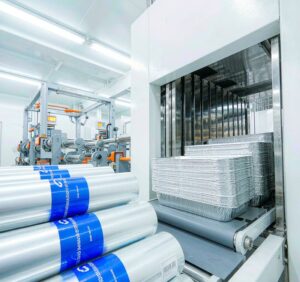
Aluminum coil is a continuous strip of aluminum that has been rolled into a coil form for efficient handling, transport, and processing. Produced through hot rolling and/or cold rolling processes, aluminum coils can range from 0.1mm to 8mm in thickness and 100mm to 2200mm in width. The coil format minimizes waste, reduces handling costs, and enables continuous processing in stamping, slitting, and forming operations.
At HXM Aluminum Coil Products, we supply coils across all major alloy series with custom dimensions and surface treatments to meet diverse industrial requirements.
Aluminum Coil by Alloy Series
1000 Series Aluminum Coil (Pure Aluminum)
1000 series coils (1050, 1060, 1070, 1100) contain ≥99% aluminum, offering excellent corrosion resistance, high thermal and electrical conductivity, and superior formability. These coils are ideal for chemical equipment, heat exchangers, electrical applications, and decorative trim. Learn more about 1000 series aluminum products.
3000 Series Aluminum Coil (Manganese Alloy)
3000 series coils (3003, 3004, 3105) provide approximately 20% higher strength than pure aluminum with excellent corrosion resistance. 3003 aluminum coil is the workhorse for roofing, gutters, and siding — read our guide on why 3003 aluminum dominates in roofing applications. The 3000 series also excels in cooking utensils and heat exchanger fin stock.
5000 Series Aluminum Coil (Magnesium Alloy)
5000 series coils (5052, 5083, 5086, 5754) offer the best combination of strength, corrosion resistance, and weldability among non-heat-treatable alloys. Marine-grade 5083 coil is essential for shipbuilding — see our 5083 Marine Grade Aluminum Guide. 5000 series aluminum coil is also widely used in automotive panels and pressure vessels.
6000 Series Aluminum Coil (Magnesium-Silicon Alloy)
6000 series coils (6061, 6063, 6082) are heat-treatable alloys offering good strength, excellent corrosion resistance, and good formability. Widely used in architectural applications, structural components, and electronic enclosures. Visit our 6000 series aluminum page for available products.
8000 Series Aluminum Coil (Specialty Alloys)
8011 and 8079 aluminum coils are specifically designed for foil production and food packaging. Our article on 8011 Aluminum Foil details these specialty alloys.
Surface Treatments for Aluminum Coil
- Mill finish: Natural aluminum appearance, suitable for further processing
- Anodized: Electrochemical process creating a durable oxide layer; available in clear and colored finishes for architectural applications
- Painted/PVDF coated: Factory-applied coatings for superior weather resistance; 15–25 year warranty in architectural applications
- Color coated (PE/PVDF): Polyester or polyvinylidene fluoride coatings in RAL colors for decorative and protective applications
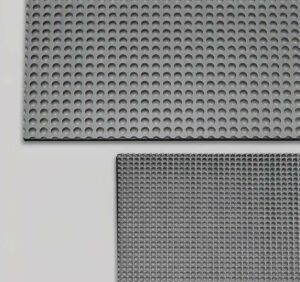
- Embossed/stucco: Textured surface for decorative and anti-slip applications
- Polished/mirror: High-reflectivity surfaces for lighting and decorative uses
Major Applications of Aluminum Coil
Construction & Architecture
Aluminum coil is the primary material for roofing sheets, wall cladding panels, composite panels (ACP/ACM), ceiling systems, and flashing. PVDF-coated aluminum coils provide decades of weather resistance for commercial buildings.
Automotive & Transportation
Automotive body panels, hoods, doors, and trunk lids increasingly use aluminum coil to reduce vehicle weight and improve fuel efficiency. 5182 and 6016 alloys are standard for automotive outer and inner panels.
Food Packaging & Containers
Aluminum coil is roll-formed into food containers, can bodies (beverage cans), and lids. 3004 and 3105 coils dominate the can stock market. Related products include aluminum foil and aluminum circles for cookware.
Heat Exchangers & HVAC
Fin stock aluminum coil (typically 1100, 3003, or 8000 series at 0.1–0.2mm thickness) is used in air conditioning evaporators, condensers, and radiators. The excellent thermal conductivity of aluminum makes it ideal for heat transfer applications.
Electronics & Electrical
Aluminum coil is used for cable sheathing, transformer winding, capacitor foil, and EMI shielding. 1060 and 1070 coils with high electrical conductivity serve power transmission applications.
Aluminum Coil Specifications: What to Specify When Ordering
| Parameter | Typical Range | Notes |
|---|---|---|
| Alloy | 1050–8079 | Choose based on strength, formability, corrosion needs |
| Temper | O, H12–H32, H14–H34, etc. | See temper guide |
| Thickness | 0.1–8.0 mm | Below 0.2mm approaches foil range |
| Width | 100–2200 mm | Custom slitting available |
| Inner Diameter | 75, 150, 200, 405, 508 mm | Must match your uncoiling equipment |
| Outer Diameter | Up to 2000 mm | Weight per coil typically 2–8 tons |
| Surface Treatment | Mill, anodized, painted | Specify RAL color for painted coil |
| Coil Weight | 2–8 MT | Standard export packaging |
Aluminum Coil vs Aluminum Sheet: Key Differences
While both are flat-rolled products, the key distinction is format and use case. Aluminum sheet is cut to specific sizes for discrete part fabrication, while aluminum coil provides continuous material for high-volume stamping, roll forming, and slitting operations. Coils are more economical for large production runs because they minimize scrap and enable continuous processing. For a deeper comparison, read our guide on aluminum sheet vs aluminum alloy sheet.
Quality Standards & Certifications
When sourcing aluminum coil, ensure compliance with relevant standards:
- ASTM B209: Standard specification for aluminum and aluminum-alloy sheet and plate
- EN 485: European standard for aluminum sheet, strip, and plate
- GB/T 3880: Chinese national standard for rolled aluminum products
- AMS specifications: Aerospace material specifications for critical applications
All HXM Aluminum coil products come with comprehensive quality testing certificates, including chemical composition analysis, mechanical property testing, and dimensional inspection.
How to Choose the Right Aluminum Coil Supplier
- Verify manufacturing capability: Does the supplier operate their own rolling mill or source from traders?
- Check alloy range: Can they supply the specific alloy and temper you need?
- Evaluate surface treatment options: Do they offer in-house coating, anodizing, or embossing?
- Request samples: Always validate material quality before placing large orders
- Assess export experience: International shipping of coils requires specialized packaging and logistics
- Compare lead times and MOQ: Factory-direct suppliers like HXM Aluminum offer competitive lead times and flexible MOQs
Frequently Asked Questions
What is the minimum order quantity for aluminum coil?
MOQ varies by alloy, thickness, and width. Standard products may have MOQs of 2–5 metric tons, while custom alloys or widths may require 10+ tons. Contact HXM Aluminum for specific MOQ information.
Can aluminum coil be slit to custom widths?
Yes, coil slitting is a standard service. Coils can be slit to widths as narrow as 10mm, depending on thickness. Slit coils are also known as aluminum strip products.
How should aluminum coils be stored?
Store coils in a dry, well-ventilated area away from corrosive atmospheres. Keep coils upright on their eye-to-the-sky position and avoid stacking unless proper dunnage is used. Moisture between wraps can cause water stain — a surface oxidation that affects appearance.
Conclusion
Aluminum coil is the backbone of modern manufacturing across construction, automotive, packaging, HVAC, and electronics industries. Understanding alloy selection, temper designations, surface treatments, and quality standards is essential for making informed sourcing decisions. Whether you need 3003 coil for roofing, 5052 coil for marine panels, or 8011 coil for packaging, choosing the right supplier with manufacturing depth and quality assurance makes all the difference.
HXM Aluminum is a direct manufacturer offering a complete range of aluminum coil products with custom specifications, rigorous quality testing, and global delivery. Contact us today for a quotation on your aluminum coil requirements.
Related reading: 3003 Aluminum Guide | 5052 Aluminum Sheet Guide | Aluminum Gauge Thickness Guide | 8011 Aluminum Foil | Aluminum Temper Designations